AC Replacement 101: Complete Guide to Your Cooling Options in Santa Monica
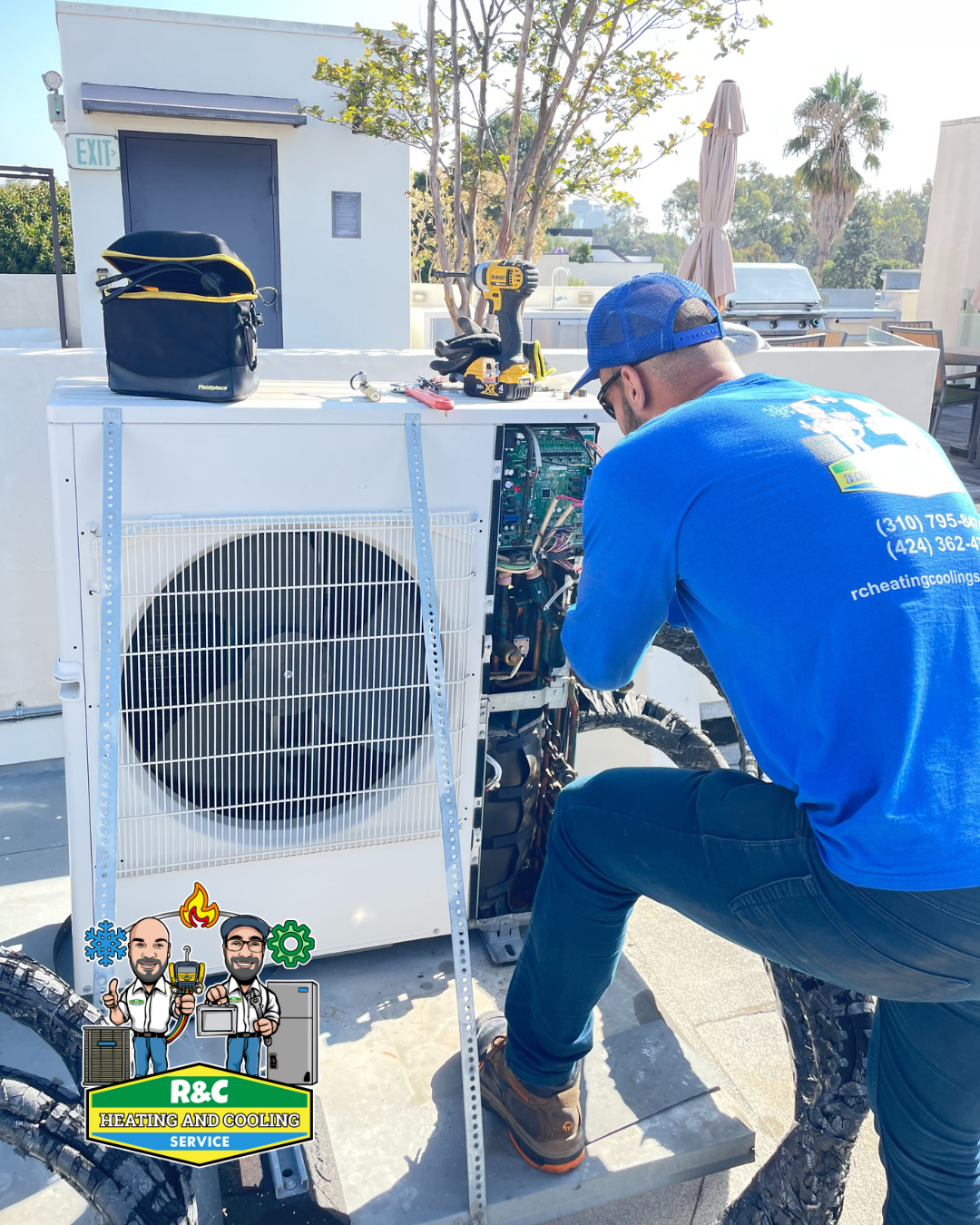
After 20 years of serving Santa Monica homeowners, we’ve seen every type of air conditioning challenge imaginable. From beach-adjacent homes dealing with salt air corrosion to inland properties struggling with aging ductwork, choosing the right AC replacement requires understanding both your home’s unique characteristics and the local climate conditions that make Santa Monica special.
When your air conditioning system reaches the end of its lifespan—typically 10-15 years for most units—the decision you make affects your comfort, energy bills, and home value for years to come. As a Santa Monica HVAC Company with NATE-certified technicians, we’ve guided hundreds of families through this important decision, and we understand that no two homes are exactly alike.
The three primary options for Santa Monica homeowners are central air conditioning systems, heat pumps, and ductless mini-split systems. Each offers distinct advantages depending on your home’s existing infrastructure, your comfort preferences, and your long-term energy goals.
Understanding Santa Monica’s Unique Climate Considerations
Santa Monica’s Mediterranean climate presents unique opportunities and challenges for air conditioning systems. According to the National Weather Service, our coastal location means summer temperatures typically range from the mid-60s to mid-70s, with occasional heat waves pushing temperatures into the 80s and 90s.
This moderate climate means that unlike inland areas that require heavy-duty cooling systems, Santa Monica homes can often benefit from more efficient, moderate-capacity systems. However, the salt air from our proximity to the Pacific Ocean can accelerate corrosion on outdoor units, making system quality and proper installation crucial for longevity.
In our experience installing systems throughout the Westside, homes within two miles of the beach often see outdoor unit components lasting 2-3 years less than identical systems installed further inland. This is why we always recommend marine-grade coatings and enhanced maintenance schedules for coastal properties.
Central Air Conditioning: The Traditional Whole-Home Solution
Central air conditioning remains the most common choice for Santa Monica homes built before 1990, primarily because most of these properties already have the necessary ductwork infrastructure from existing forced-air heating systems.
How Central Air Works in Practice
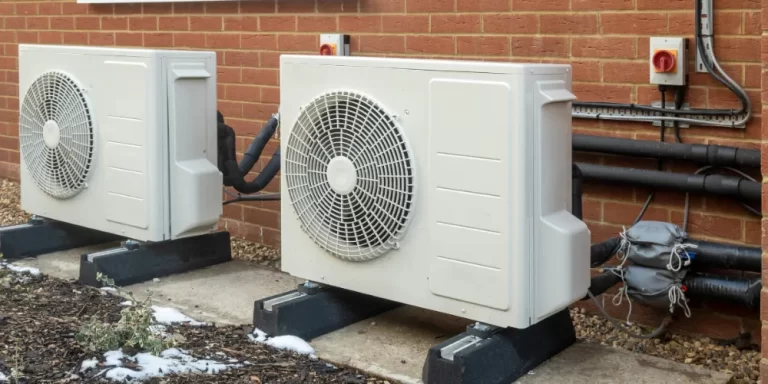
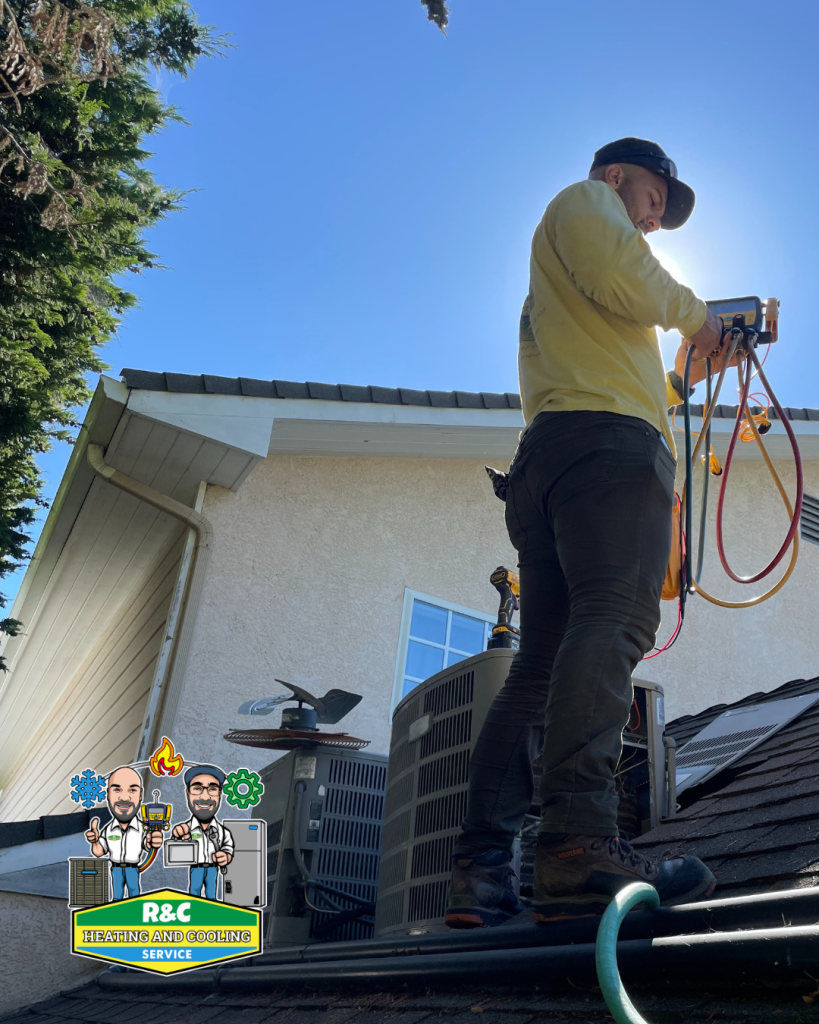
A central AC system uses a single outdoor condenser unit connected to an indoor evaporator coil, typically located in your home’s furnace or air handler. Refrigerant circulates between these components while a blower fan pushes cooled air through your existing ductwork to every room in your home.
We recently completed a central AC replacement for a 1950s ranch-style home in Santa Monica’s Sunset Park neighborhood. The homeowners had functional ductwork but their 18-year-old system was consuming 40% more energy than modern standards. By upgrading to a 16 SEER central system with a variable-speed blower, they immediately noticed more even temperatures throughout their home and a 35% reduction in their summer cooling costs.
Advantages of Central Air Systems
Uniform Temperature Control: Central systems excel at maintaining consistent temperatures throughout your entire home. Unlike room-by-room solutions, you won’t experience hot spots or cold zones when the system is properly sized and installed.
Hidden Aesthetic: Many homeowners prefer central air because only the vents are visible inside your home. The indoor unit typically lives in your garage, basement, or utility closet, maintaining your interior design aesthetic.
Superior Air Filtration: Central systems can accommodate high-efficiency filters, UV lights, and air purification systems that improve indoor air quality throughout your entire home. This is particularly valuable for families with allergies or respiratory concerns.
Cost-Effective with Existing Ducts: If your home already has intact, properly sized ductwork, central AC installation is typically the most economical option upfront.
Disadvantages and Limitations
Ductwork Energy Loss: According to the U.S. Department of Energy, poorly sealed or damaged ductwork can reduce system efficiency by 20-30%. In older Santa Monica homes, we frequently discover ductwork issues during system replacements.
Limited Zone Control: Traditional central systems cool your entire home to the same temperature. While zoning systems exist, they add significant complexity and cost to the installation.
Installation Complexity for Ductless Homes: Adding ductwork to homes that don’t have it—common in Santa Monica’s older craftsman and Spanish-style homes—can cost $5,000-15,000 and requires significant construction work.
Heat Pumps: Year-Round Efficiency for Moderate Climates
Heat pumps represent an excellent middle ground for Santa Monica’s mild climate, providing both heating and cooling through a single, highly efficient system. These units work by moving heat rather than generating it, making them significantly more energy-efficient than traditional heating and cooling combinations.
Why Heat Pumps Excel in Santa Monica
Santa Monica’s moderate winter temperatures—typically ranging from 45-65°F—fall within the optimal efficiency range for modern heat pumps. Unlike colder climates where heat pumps struggle to extract heat from frigid air, our mild winters allow these systems to operate at peak efficiency year-round.
We recently installed a 19 SEER2 heat pump system for a family in Mid-City Santa Monica who was replacing both an aging central AC unit and an old natural gas furnace. Their first-year energy savings totaled $1,200, and they qualified for local utility rebates that offset 25% of the installation cost.
Heat Pump Advantages
Single System Simplicity: Instead of maintaining separate heating and cooling systems, a heat pump provides year-round comfort through one unit. This simplifies maintenance, reduces potential failure points, and often provides long-term cost savings.
Exceptional Efficiency: Modern heat pumps achieve SEER2 ratings of 15-24+ and can provide 2-3 times more heating energy than they consume in electricity. In Santa Monica’s moderate climate, this efficiency advantage is maintained throughout the year.
Environmental Benefits: Heat pumps produce zero direct emissions and, when paired with clean electricity sources, offer the most environmentally friendly heating and cooling option available.
Consistent Performance: Unlike traditional furnaces that cycle on and off, many heat pumps use variable-speed technology to maintain steady temperatures with less energy consumption.

Heat Pump Considerations
Higher Upfront Investment: Quality heat pump systems typically cost 15-25% more than comparable central AC units, though long-term energy savings often justify the additional investment within 5-7 years.
Backup Heat Requirements: While rare in Santa Monica, extremely cold nights (below 40°F) may require supplemental heating. Most modern heat pumps include electric resistance backup, though this reduces overall efficiency.
Ductless Mini-Split Systems: Precision Comfort and Maximum Efficiency
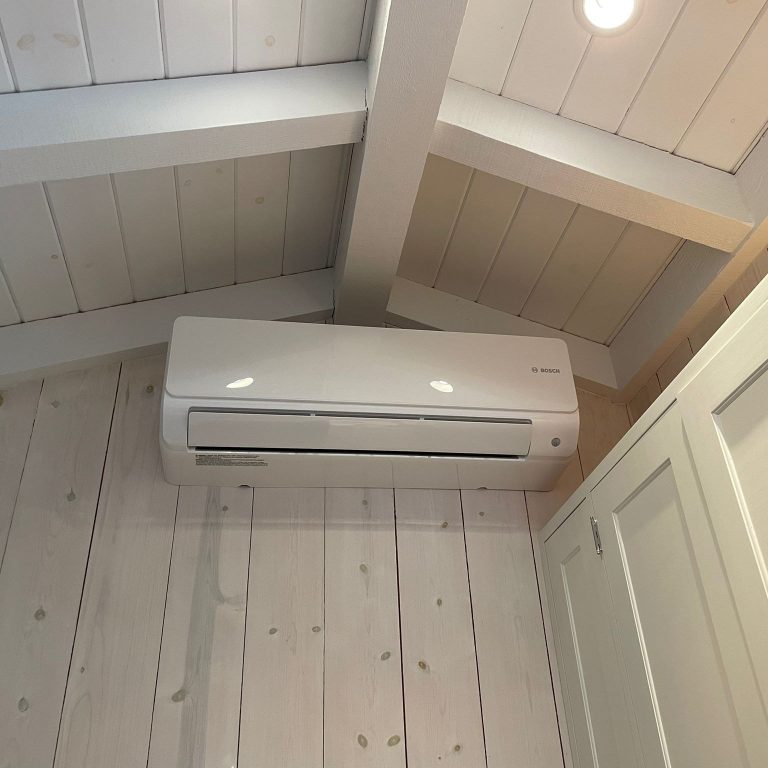
Ductless mini-split systems have revolutionized home comfort by providing individual zone control with exceptional efficiency. These systems consist of an outdoor unit connected to one or more indoor air handlers through a small conduit that carries refrigerant lines, electrical connections, and drainage.
Real-World Mini-Split Applications
Last month, we completed a whole-home mini-split installation for a 1920s Spanish-style home in Santa Monica Canyon. The property had no existing ductwork, and adding central air would have required extensive renovation. Instead, we installed a 5-zone system with indoor units strategically placed in the living room, master bedroom, kitchen, and two additional bedrooms. The homeowners now enjoy precise temperature control in each space while achieving a 20 SEER2 efficiency rating.
For homeowners considering Santa Monica AC REPLACEMENT, mini-splits offer particular advantages in our diverse housing stock, which includes everything from beachfront condos to hillside craftsman homes.
Mini-Split System Advantages
Superior Zone Control: Each indoor unit operates independently, allowing different temperatures in different rooms. This eliminates the common complaint of bedrooms being too warm while living areas are comfortable, or vice versa.
Exceptional Efficiency: Top-tier mini-split systems achieve SEER2 ratings of 20-42, significantly higher than central systems. This translates to substantially lower operating costs, particularly important as utility rates continue rising.
Minimal Installation Impact: Installing mini-splits requires only a 3-inch hole through the wall for each indoor unit’s conduit. No ductwork construction, no attic access, and minimal disruption to your daily routine.
Quiet Operation: Modern mini-split indoor units operate at 19-25 decibels—quieter than most refrigerators—while outdoor units are significantly quieter than traditional central AC condensers.
Individual Room Efficiency: Cool only the spaces you’re using. Unlike central systems that condition your entire home, mini-splits allow you to turn off units in unoccupied rooms, maximizing energy savings.
Mini-Split Considerations
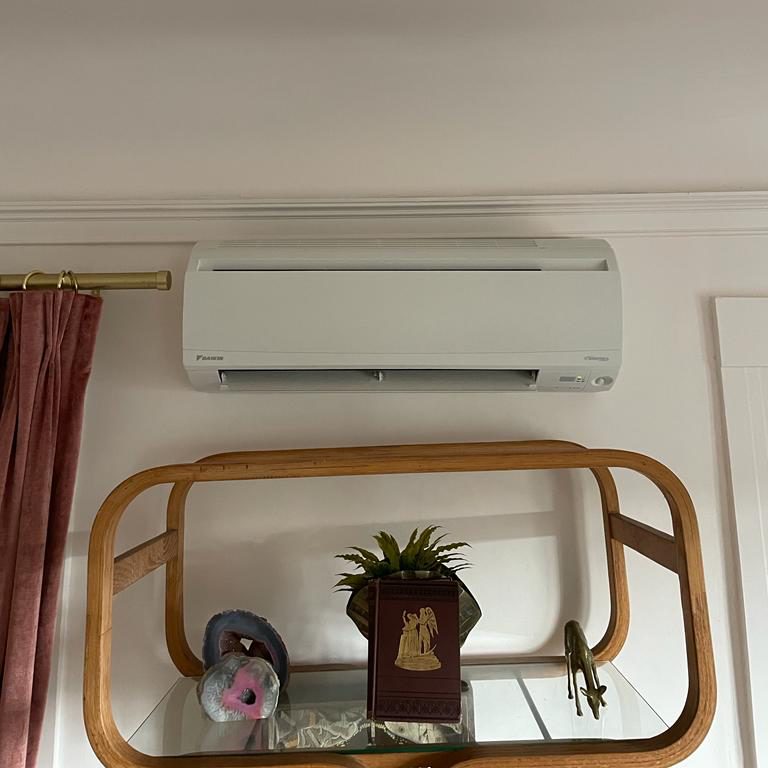
Visible Indoor Units: While modern mini-split indoor units are sleek and unobtrusive, they remain visible on your walls. Some homeowners find this aesthetically challenging, though many appreciate their modern appearance.
Multiple Zone Investment: While single-zone mini-splits are cost-competitive, whole-home systems with 4-6 indoor units represent a significant upfront investment. However, the energy savings and enhanced comfort typically justify the cost within 6-8 years.
Professional Installation Critical: Proper refrigerant line installation requires specialized training and equipment. Poor installation can void warranties and reduce system efficiency and lifespan.
Efficiency Ratings and Energy Cost Analysis
Understanding efficiency ratings helps predict long-term operating costs and environmental impact. Modern systems use SEER2 ratings, which replaced older SEER ratings in 2023 to better reflect real-world performance conditions.
SEER2 Rating Comparisons
Central Air Conditioning: 14-21 SEER2, with high-efficiency models reaching 24+ SEER2. Entry-level systems meet minimum efficiency standards while premium models offer variable-speed technology for enhanced comfort and efficiency.
Heat Pumps: 15-24 SEER2 for cooling mode, with additional HSPF2 (Heating Seasonal Performance Factor) ratings of 8.5-13+ for heating efficiency. The dual-mode operation provides year-round energy savings.
Ductless Mini-Splits: 20-42 SEER2, with premium models achieving the highest efficiency ratings available in residential systems. The combination of advanced inverter technology and elimination of ductwork losses creates exceptional performance.
Local Energy Cost Implications
Santa Monica residents pay some of California’s highest electricity rates, making system efficiency particularly important for long-term operating costs. Based on current Southern California Edison rates and typical Santa Monica home cooling loads, here’s what we observe:
A 2,000 square foot home replacing a 10 SEER central AC system (common in homes built before 2005) with a 16 SEER2 central system typically sees annual cooling cost reductions of $400-600. Upgrading to a 20+ SEER2 mini-split system often provides $800-1,200 in annual savings compared to the older central system.
These savings compound over the system’s 15-20 year lifespan, often totaling $8,000-20,000 in avoided energy costs. When combined with potential utility rebates and tax incentives, high-efficiency systems frequently pay for themselves through energy savings alone.
Installation Considerations and Timeline Expectations
Proper system sizing and installation significantly impact performance, efficiency, and longevity. In our experience serving Santa Monica homeowners, installation timelines and complexity vary considerably based on system type and home characteristics.
Central Air and Heat Pump Installation
For homes with existing, properly sized ductwork, central system replacement typically requires 1-2 days. The process involves removing the old outdoor unit, installing the new condenser, replacing the indoor evaporator coil, connecting refrigerant lines, and testing system operation.
However, homes requiring ductwork modifications or upgrades may need 3-5 days for completion. Older Santa Monica homes often have undersized ducts or damaged sections that should be addressed during system replacement to achieve optimal performance.
We recently completed a heat pump installation in a 1960s ranch home where the existing ductwork was sized for an old, low-efficiency system. Upgrading the ducts to accommodate the new high-efficiency unit’s airflow requirements added two days to the installation but improved system performance by 25%.
Mini-Split Installation Process
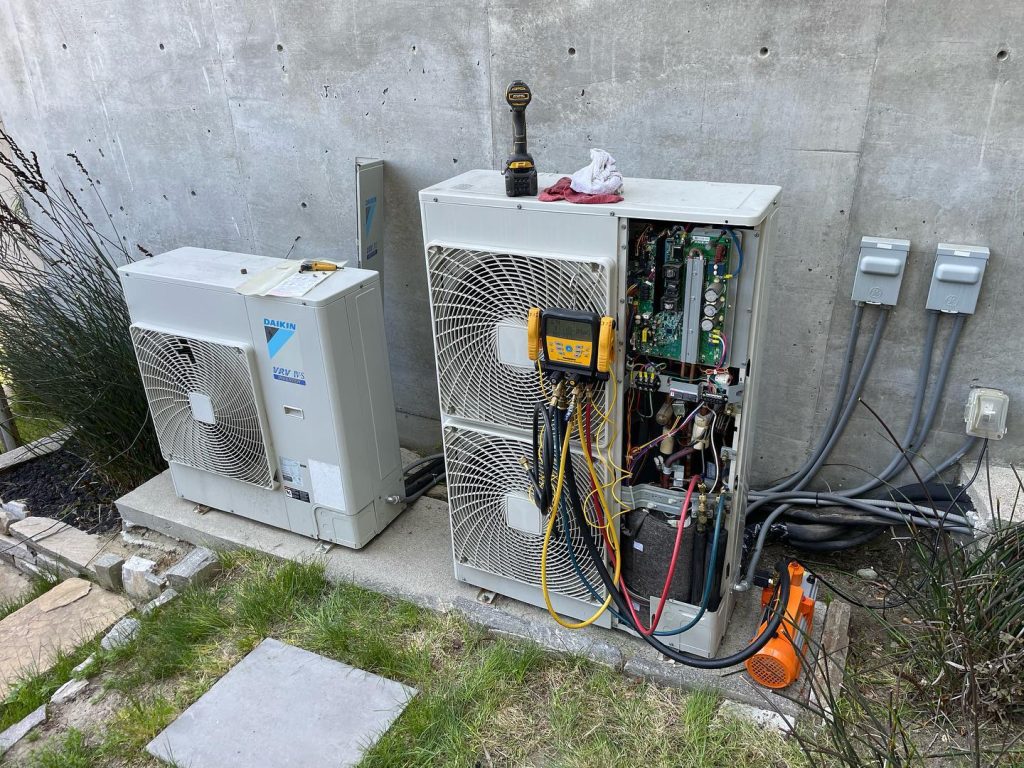
Single-zone mini-split installations typically require 4-6 hours, while whole-home systems with 4-6 indoor units generally take 1-2 days. The process involves mounting indoor units, drilling conduit holes, running refrigerant lines, installing the outdoor unit, and commissioning the system.
The non-invasive nature of mini-split installation makes it particularly attractive for Santa Monica’s historic homes, where preserving original architectural features is important. We can typically complete installations without accessing attics, crawl spaces, or making significant structural modifications.
Choosing the Right System for Your Santa Monica Home
System selection depends on multiple factors specific to your home and lifestyle. Based on our extensive experience throughout Santa Monica’s diverse neighborhoods, here’s our practical guidance for different scenarios:
Choose Central Air or Heat Pumps If:
Your home has existing, intact ductwork in good condition. Homes built after 1980 typically have adequate duct systems, though inspection is always recommended to verify proper sizing and sealing.
You prefer uniform, whole-home temperature control and don’t need individual room customization. Many families appreciate the simplicity of a single thermostat controlling their entire home’s comfort.
You prioritize hidden system components and don’t want visible indoor units affecting your interior design. Central systems maintain the clean lines appreciated in Santa Monica’s architectural styles.
Your budget favors lower upfront costs with moderate long-term savings. Central systems typically offer the lowest initial investment when adequate ductwork already exists.
Choose Ductless Mini-Splits If:
Your home lacks existing ductwork, common in Santa Monica’s pre-1950 housing stock, including many craftsman, Spanish, and custom beach homes.
You want maximum energy efficiency and are willing to invest upfront for long-term savings. Mini-splits offer the highest SEER2 ratings and lowest operating costs available.
Different family members prefer different temperatures in various rooms. Multi-zone systems allow personalized comfort without compromising others’ preferences.
You’re adding new living spaces, converting garages, or creating home offices that aren’t connected to existing ductwork. Mini-splits provide targeted comfort without major construction projects.
You prioritize quiet operation, particularly important for bedrooms or home offices where noise can be disruptive.
Professional Assessment and Installation
Proper system sizing requires professional load calculations that account for your home’s square footage, insulation levels, window specifications, ceiling heights, and orientation. Manual J load calculations, required by industry standards, ensure your new system provides optimal comfort and efficiency.
As certified professionals serving Santa Monica for over two decades, we’ve seen the consequences of improperly sized systems: short cycling that reduces efficiency and comfort, inadequate cooling capacity during heat waves, and premature system failure from overwork.
During our assessment process, we evaluate your existing infrastructure, discuss your comfort preferences and budget, and provide detailed proposals with long-term cost projections. This comprehensive approach ensures you make an informed decision that serves your family’s needs for years to come.
For residents seeking expert guidance on their specific situation, our R&C Heating and Cooling Service Company team provides detailed consultations that include load calculations, efficiency projections, and customized recommendations based on your home’s unique characteristics.
Maintenance Requirements and Long-Term Performance
Different systems require varying levels of ongoing maintenance to maintain efficiency and reliability. Understanding these requirements helps inform your decision and budget for long-term ownership costs.
Central Air and Heat Pump Maintenance
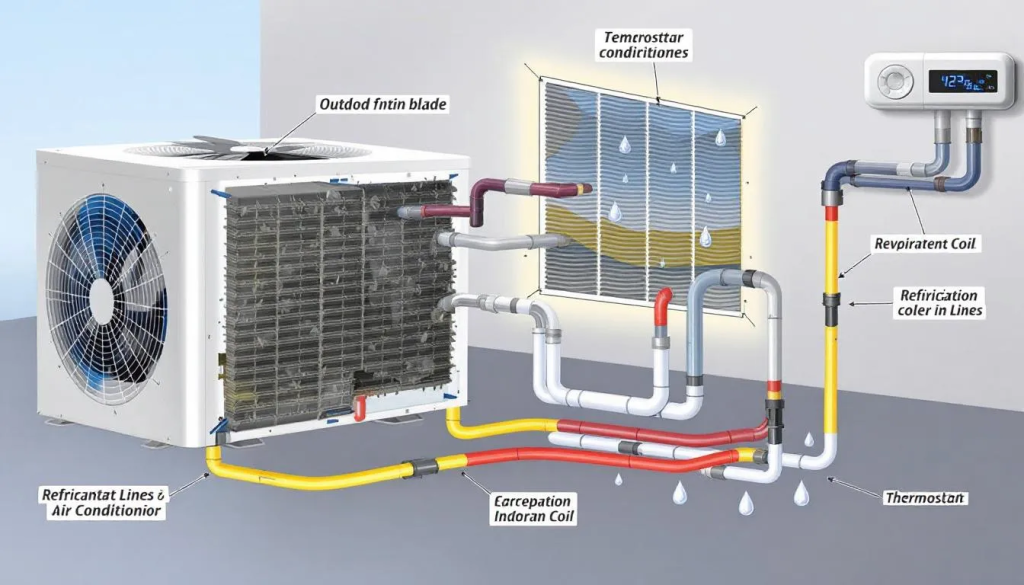
Central systems require annual professional maintenance including refrigerant level checks, electrical connection inspection, coil cleaning, and filter replacement. Ductwork should be inspected every 5-7 years and sealed if leaks develop.
Heat pumps benefit from bi-annual service—once before cooling season and once before heating season—to ensure optimal performance in both modes. This additional service typically costs $150-250 annually but maintains efficiency and prevents costly repairs.
Mini-Split Maintenance
Mini-splits require less intensive maintenance than central systems. Monthly filter cleaning (a simple rinse-and-dry process), annual professional service for refrigerant and electrical checks, and periodic outdoor unit cleaning maintain optimal performance.
The absence of ductwork eliminates concerns about duct leaks, contamination, or cleaning requirements, reducing long-term maintenance costs and complexity.
Making Your Final Decision
Selecting the right air conditioning system represents a significant investment in your home’s comfort, energy efficiency, and value. The decision impacts your daily comfort, monthly utility bills, and long-term satisfaction for 15-20 years.
Based on our experience helping Santa Monica families navigate this decision, we recommend starting with a professional assessment that evaluates your home’s specific characteristics, your family’s comfort preferences, and your long-term energy goals. This foundation ensures you select a system that truly meets your needs rather than making decisions based on initial cost alone.
For immediate guidance on your specific situation and to schedule a comprehensive assessment, we invite you to Contact Us for a consultation. Our certified technicians provide transparent, detailed recommendations that help you make confident decisions about your home’s comfort future.
Whether you choose the whole-home consistency of central air, the year-round efficiency of a heat pump, or the precision control of mini-splits, proper professional installation and ongoing maintenance ensure you receive maximum value from your investment. To get started with a professional assessment and installation quote, Book AC REPLACEMENT Appointment today.
Your home’s comfort shouldn’t be left to chance. With the right system selection and professional installation, you’ll enjoy reliable, efficient cooling that enhances your quality of life while managing energy costs effectively. According to the U.S. Department of Energy, proper system selection and installation can reduce cooling costs by 20-50% compared to older, inefficient systems, making this investment beneficial for both comfort and long-term financial savings.