Aircon Air Conditioners: Complete Guide to Cooling Systems for Your Home
Aircon air conditioners are cooling systems designed to remove heat and humidity from indoor spaces, providing comfort during hot weather. These systems use a vapor-compression refrigeration cycle to transfer heat from inside your home to the outdoors, effectively lowering indoor temperature and creating a more comfortable living environment.
Modern air conditioners deliver efficient cooling solutions for residential properties, offering a variety of models and features to meet different needs and budgets.
What This Guide Covers
This comprehensive guide covers residential aircon systems, key technologies, installation requirements, and maintenance practices. We focus on home cooling solutions including split systems, window units, and portable air conditioners. This guide does NOT cover large commercial HVAC systems or complex technical specifications for industrial applications.
Who This Is For
This guide is designed for homeowners considering new air conditioning installation, renters looking for effective cooling solutions, and property managers upgrading existing systems. Whether you’re dealing with your first summer in a new home or replacing an aging system, you’ll find practical advice for making informed decisions.
Why This Matters
Rising temperatures, increasing energy costs, and growing comfort expectations make choosing the right air conditioning system a significant long-term investment. The right aircon can deliver substantial energy savings while maintaining optimal comfort, while poor choices can lead to high utility bills and frequent problems.
What You’ll Learn:
Different aircon types and their best applications
Key technologies and efficiency ratings that impact performance and costs
Installation requirements and sizing considerations
Common problems and practical solutions for optimal system life
Understanding Aircon Air Conditioner Types
Aircon air conditioners are cooling systems that remove heat and humidity from indoor spaces using refrigeration technology. These systems work by circulating refrigerant between indoor and outdoor components, absorbing heat from inside your home and releasing it outside. The process also removes moisture from the air, reducing humidity levels for enhanced comfort.
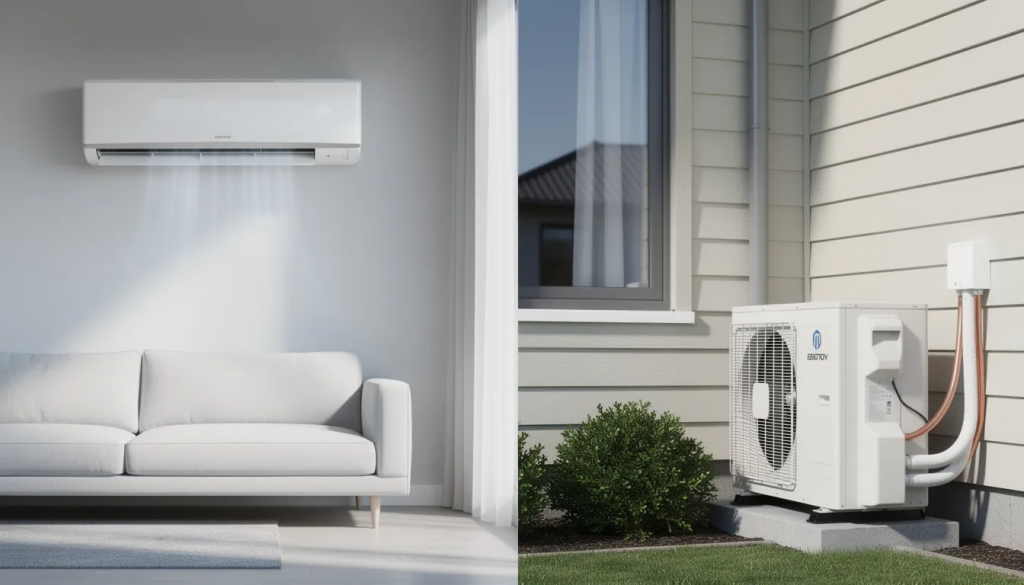
Understanding the different types available helps you select the most suitable system for your specific cooling needs, room configuration, and budget. The right choice affects everything from installation costs to long-term energy efficiency and comfort levels.
Split System Air Conditioners
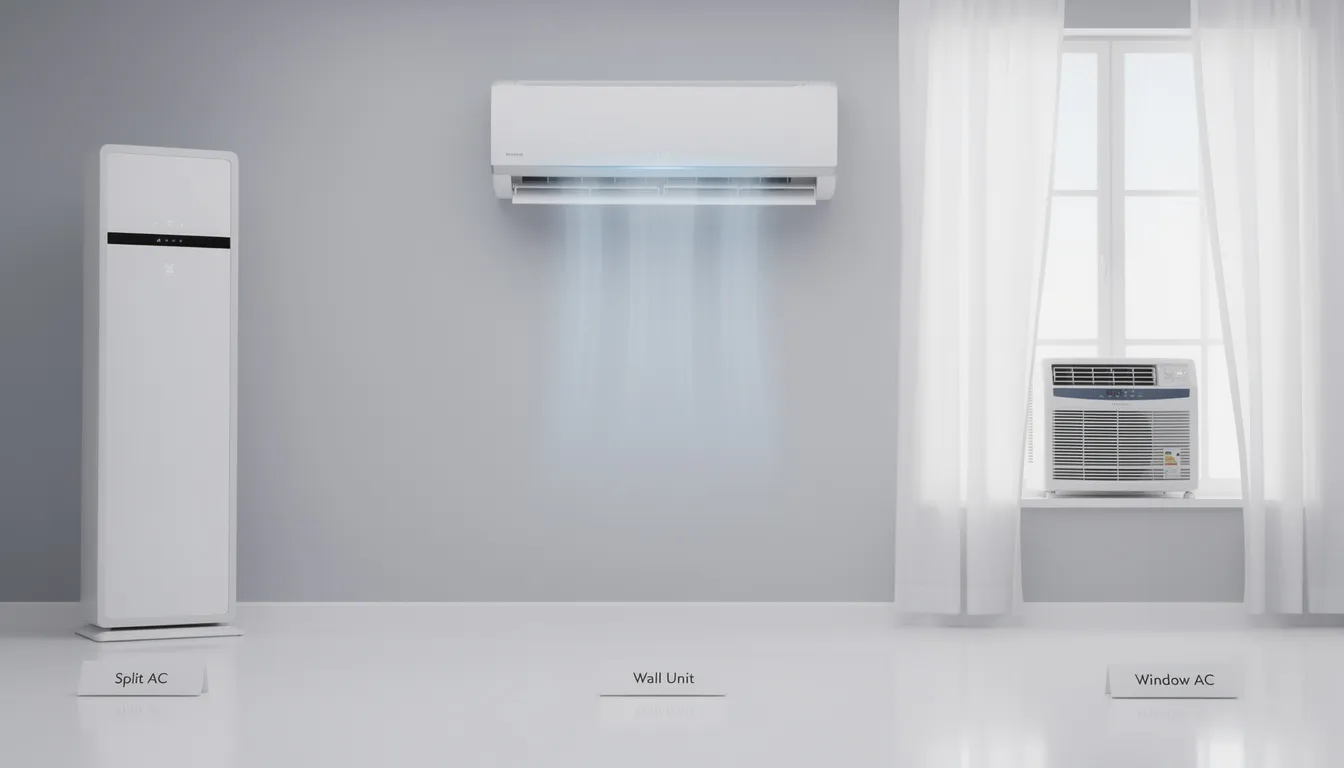
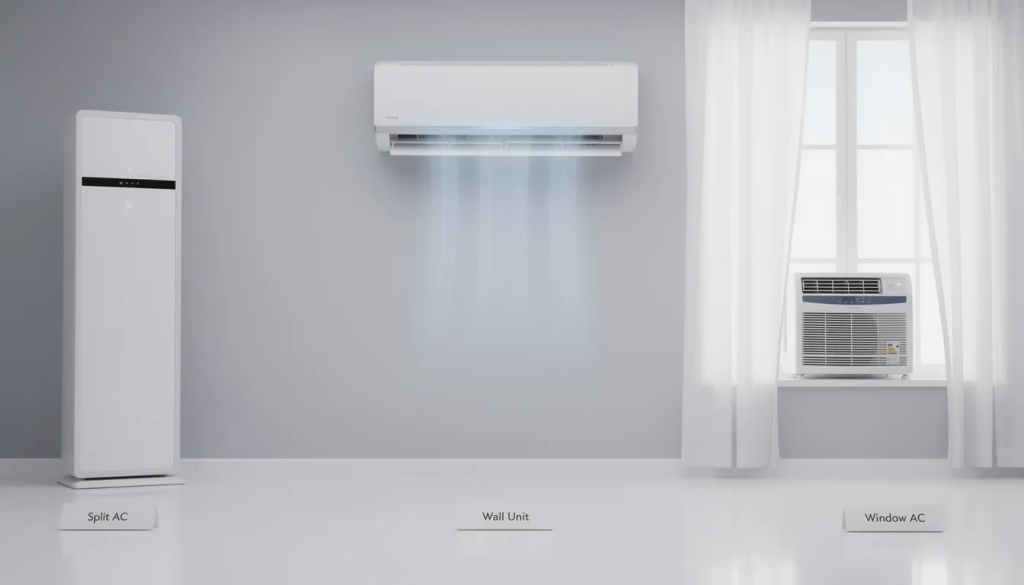
Split system air conditioners consist of two main components: an indoor unit containing the evaporator coil and blower, and an outdoor unit housing the compressor and condenser. These units connect via refrigerant lines and electrical wiring, allowing the noisy compressor to remain outside while delivering quiet indoor operation.
Split systems represent the most popular residential aircon choice because they offer superior energy efficiency, quiet performance, and flexible installation options. They work well for single rooms or multi-zone applications, delivering consistent cooling with minimal noise in living spaces.
Window and Portable Air Conditioners
Window air conditioners are self-contained units that mount directly in window openings, with all components housed in a single cabinet. Portable air conditioners are freestanding units that connect to windows through flexible ducts, offering mobility and easier installation for renters.
These options serve as more affordable but less efficient alternatives to split systems, ideal for temporary cooling needs, rental properties with installation restrictions, or budget-conscious situations where lower upfront costs outweigh efficiency considerations.
Building on the foundation of understanding system types, the next critical step involves evaluating the features and technologies that determine long-term performance and operating costs.
Key Aircon Features and Technologies
Modern air conditioning systems incorporate advanced technologies that significantly impact energy consumption, comfort levels, and user convenience. Understanding these features helps you select models that deliver the best value and performance for your specific requirements.
Inverter Technology and Energy Efficiency
Inverter technology allows air conditioners to continuously adjust compressor speed rather than cycling on and off, maintaining steady temperatures while using less energy. Systems with inverter technology typically achieve higher SEER (Seasonal Energy Efficiency Ratio) ratings, translating to substantial energy savings over the system’s life.
Energy Star certification indicates that an aircon meets strict efficiency standards set by government agencies. Energy Star models use 10-15% less energy than standard units, delivering lower utility bills and reduced environmental impact while maintaining excellent cooling performance.
Smart Controls and Connectivity
Wi-Fi enabled air conditioners allow remote control through smartphone apps, enabling users to adjust temperature settings, monitor energy usage, and schedule operation from anywhere with internet access. Many models integrate with voice assistants and smart home systems for convenient hands-free control.
Unlike basic models with simple thermostat controls, smart aircon systems offer advanced scheduling, geofencing capabilities, and energy monitoring features that help optimize comfort while minimizing energy consumption and costs.
Air Quality and Additional Functions
Modern air conditioners incorporate multi-stage filtration systems that remove dust, pollen, and other airborne particles. Higher-end models feature HEPA filters or UV sterilization technology, improving indoor air quality while cooling your space.
Many aircon units also function as heat pumps, providing efficient heating during cooler months. Dehumidification capabilities help control moisture levels year-round, while advanced sound dampening technology ensures quiet operation that won’t disturb daily activities or sleep.
Key Points:
Energy efficiency ratings directly impact long-term operating costs and environmental impact
Smart features enhance convenience and enable advanced energy-saving strategies
Air quality improvements and multi-function capabilities add significant value beyond basic cooling
Understanding these technologies prepares you to make informed decisions about installation requirements and system sizing, which are crucial for realizing the full benefits of modern aircon features.
Aircon Installation and Sizing Guide
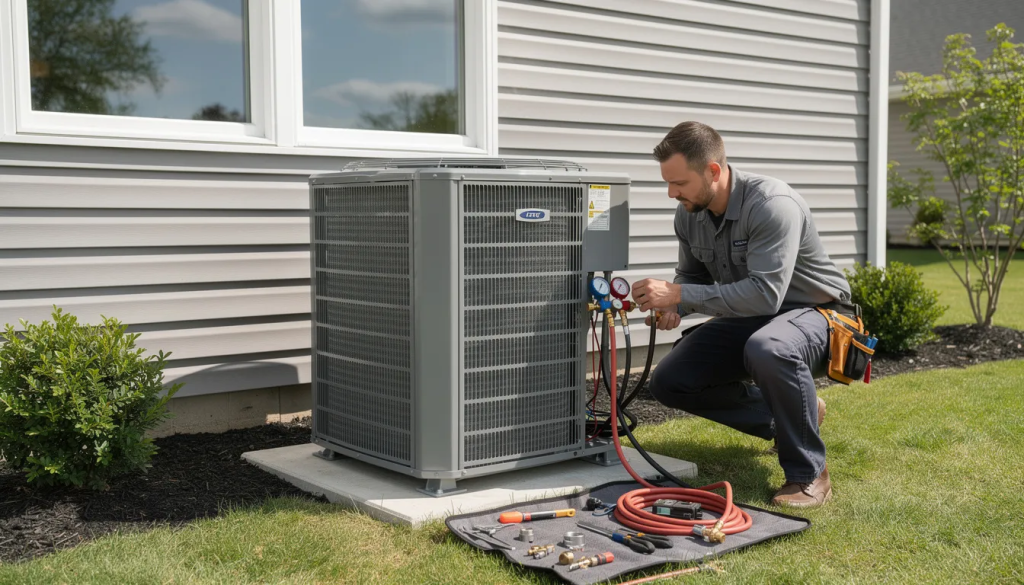
Proper sizing and professional installation are essential for achieving optimal performance, energy efficiency, and system longevity. Incorrectly sized systems waste energy, fail to maintain comfortable temperatures, and experience premature wear that shortens equipment life.
Step-by-Step: Sizing Your Aircon System
When to use this: Before purchasing any air conditioning system to ensure proper capacity and avoid costly mistakes.
Calculate room square footage: Measure length and width of spaces to be cooled, accounting for open floor plans and connected areas that share air circulation.
Consider ceiling height and insulation: Higher ceilings and poor insulation increase cooling requirements, while well-insulated homes with standard 8-foot ceilings need less capacity.
Factor in windows and heat sources: Count windows, note their orientation, and identify heat-generating appliances or electronics that add to the cooling load.
Apply BTU calculation formula: Use 20 BTU per square foot as a starting point, then adjust based on ceiling height, insulation, windows, and local climate conditions.
Account for local climate conditions: Homes in extremely hot, humid climates may need 25-30% additional capacity, while moderate climates allow for more conservative sizing.
Comparison: Professional vs DIY Installation
Feature | Professional Installation | DIY Installation |
|---|---|---|
Cost | $500-2000+ labor costs | Equipment costs only |
Time Required | 4-8 hours same day | Multiple days/weekends |
Warranty Coverage | Full manufacturer warranty | Limited or voided warranty |
Safety Considerations | Licensed, insured work | Personal liability risks |
Code Compliance | Guaranteed permits/codes | Owner responsibility |
Feature
Professional Installation
DIY Installation
Cost
$500-2000+ labor costs
Equipment costs only
Time Required
4-8 hours same day
Multiple days/weekends
Warranty Coverage
Full manufacturer warranty
Limited or voided warranty
Safety Considerations
Licensed, insured work
Personal liability risks
Code Compliance
Guaranteed permits/codes
Owner responsibility
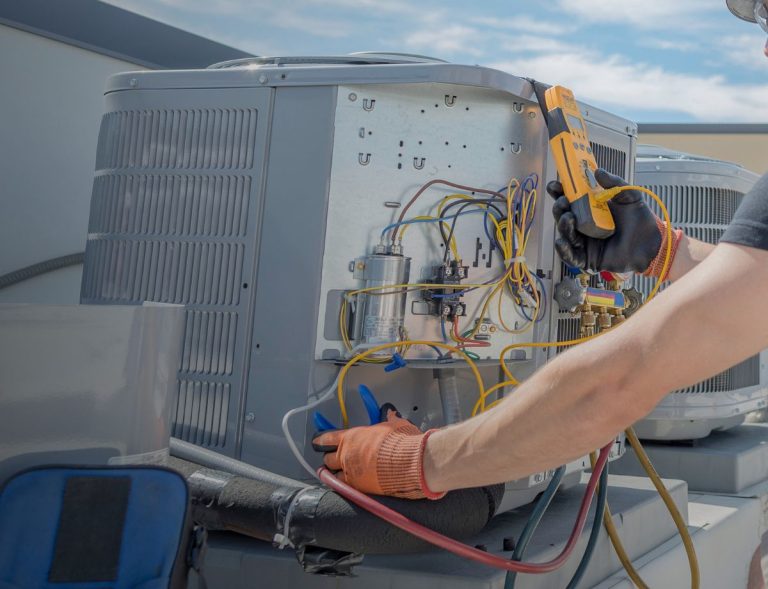
Professional installation ensures proper refrigerant handling, electrical connections, and local code compliance while preserving warranty coverage. DIY installation may save money upfront but carries risks of improper installation that can damage equipment, void warranties, and create safety hazards.
For split systems and complex installations, professional work is strongly recommended, while simple window units may be suitable for confident DIYers with basic skills and tools.
Common Aircon Challenges and Solutions
Understanding typical air conditioning problems helps you maintain optimal performance, extend system life, and avoid expensive emergency repairs during peak cooling seasons.
Challenge 1: Poor Cooling Performance
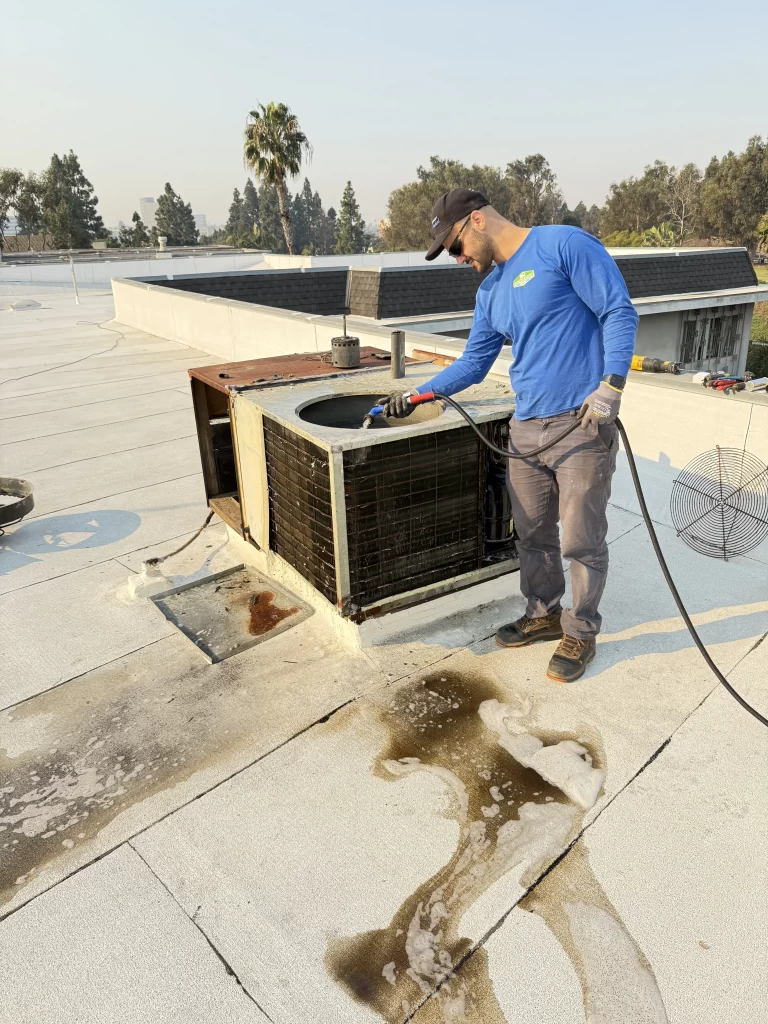
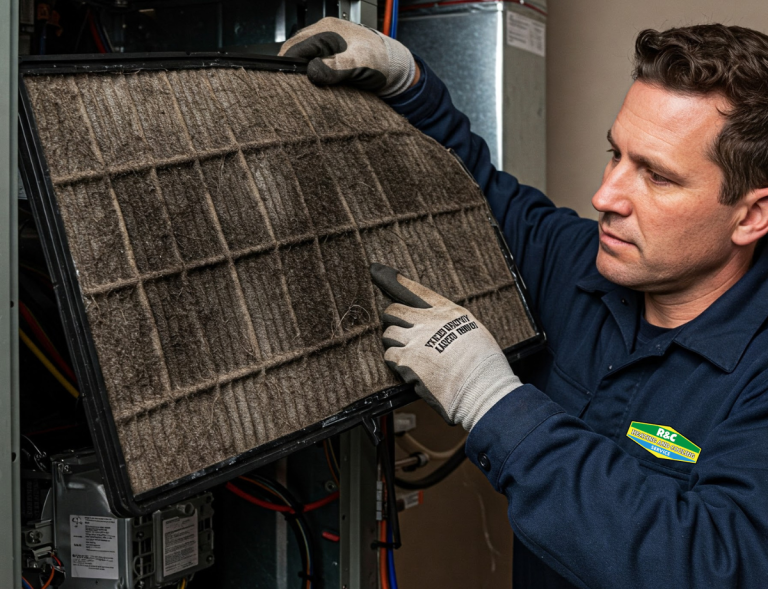
Solution: Check and replace air filters monthly during heavy use periods, ensure all vents remain unblocked, verify proper system sizing for your space, and schedule professional maintenance annually to clean coils and check refrigerant levels.
Dirty filters restrict airflow and reduce efficiency by up to 15%, while blocked vents create pressure imbalances that force the system to work harder and cool less effectively.
Challenge 2: High Energy Bills
Solution: Upgrade to higher SEER rating units when replacing equipment, improve home insulation and seal air leaks, use programmable thermostats to avoid overcooling, and maintain regular service schedules to keep systems operating at peak efficiency.
Setting thermostats 2-3 degrees higher during summer months can reduce energy consumption by 10-20% while maintaining comfortable conditions, especially when combined with ceiling fans for improved air circulation.
Challenge 3: Frequent Repairs and Breakdowns
Solution: Implement preventive maintenance schedules including filter changes, coil cleaning, and annual professional inspections, address minor issues promptly before they become major problems, select quality brands with comprehensive warranties, and work exclusively with certified HVAC contractors.
Regular maintenance prevents 85% of common air conditioning problems while extending equipment life by 5-10 years, making it a cost-effective investment compared to emergency repairs and premature replacement.
These solutions help ensure your aircon investment delivers reliable comfort and efficiency throughout its designed service life.
Conclusion and Next Steps
Selecting the right aircon air conditioner system involves balancing cooling capacity, energy efficiency, features, and installation requirements to meet your specific comfort needs and budget constraints. Modern systems offer excellent performance and energy savings when properly sized, installed, and maintained.
To get started:
Assess your cooling needs and budget: Calculate required BTU capacity for your space and determine your price range for both equipment and installation costs.
Get quotes from certified contractors: Contact licensed HVAC professionals for system recommendations and installation estimates for your specific home and requirements.
Compare energy efficiency ratings and features: Evaluate SEER ratings, Energy Star certification, and smart features to find models that deliver the best long-term value and performance.
Related Topics: Ductless mini-split systems for zone cooling, central air upgrades for whole-home comfort, and smart home integration options offer advanced solutions for comprehensive climate control and energy management.
Additional Resources
Energy Star calculator tools for sizing requirements and efficiency comparisons across different models and brands
HVAC contractor certification verification through NATE (North American Technician Excellence) and local licensing boards
Manufacturer warranty comparison guides and available rebate programs for energy-efficient equipment purchases