Complete Guide to HVAC Systems: Heating, Ventilation, and Air Conditioning Explained
HVAC systems are integrated heating, ventilation, and air conditioning systems that control indoor temperature, humidity, and air quality in residential and commercial buildings. These mechanical systems represent the primary method for creating comfortable indoor environments while managing energy consumption and maintaining acceptable indoor air quality.
Understanding HVAC systems helps you make informed decisions about equipment selection, energy efficiency improvements, and system maintenance that directly impact comfort and operating costs.
What This Guide Covers
This comprehensive guide covers HVAC system fundamentals, major components and their functions, different system types and selection criteria, installation considerations, and maintenance requirements. We focus on practical applications for residential and small commercial buildings, excluding specialized industrial systems.
Who This Is For
This guide is designed for homeowners considering HVAC upgrades, property managers overseeing building climate control, students studying heating ventilation and air systems, and anyone wanting to understand how these mechanical systems work. Whether you’re planning a system replacement or seeking to improve energy efficiency, you’ll find actionable information for your specific needs.
Why This Matters
HVAC systems consume up to 40% of total energy consumption in residential buildings and represent major capital investments often exceeding $10,000 for complete system installations. Proper system selection and maintenance directly affect indoor air quality, energy savings, and occupant comfort while preventing costly emergency repairs.
What You’ll Learn:
How heating, cooling, and ventilation systems work together
Major HVAC components and their specific functions
System types including split systems, packaged systems, and ductless options
Selection criteria based on climate, building size, and energy efficiency requirements
Understanding HVAC System Fundamentals
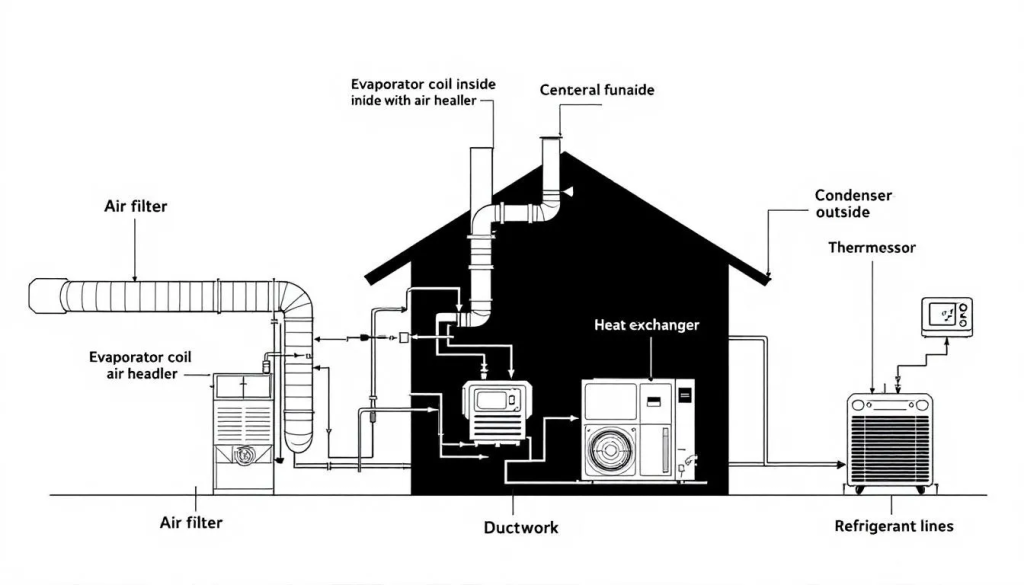
HVAC systems function as integrated networks that simultaneously control indoor temperature, humidity control, and air quality through coordinated heating, cooling, and ventilation operations. These mechanical systems work by conditioning outdoor air and circulating treated air throughout buildings while exhausting stale air to maintain fresh air circulation.
Modern hvac systems create comfortable indoor environments by managing multiple environmental factors simultaneously. Temperature control maintains desired indoor temperature regardless of outdoor temperature fluctuations. Humidity control prevents excess moisture that leads to mold growth while avoiding dry conditions that cause discomfort. Air quality management filters contaminants while introducing fresh air to replace stale air.
Energy efficiency directly connects to system design choices. High-efficiency equipment reduces energy consumption while properly designed ductwork and control systems optimize system performance throughout varying load conditions.
Heating System Components
Central heating systems use furnaces, boilers, or heat pumps as primary heat sources. Gas heating systems burn natural gas in furnaces equipped with heat exchangers that transfer combustion heat to surrounding air. Heat pumps extract thermal energy from outdoor air or ground sources, providing both heating and cooling through refrigeration cycle operations.
Heat distribution methods include forced-air systems that circulate heated air through ductwork, radiant systems that heat building surfaces, and hydronic systems that circulate hot water through pipes. Each distribution method affects installation cost, energy efficiency rating, and temperature control characteristics.
This connects to overall system performance because heating system efficiency directly impacts total energy consumption, with heating representing the largest single energy load in most climates.
Ventilation and Air Quality Control
Mechanical ventilation actively controls fresh air introduction and stale air removal through air handling units and exhaust systems. Natural ventilation relies on passive airflow through windows and building openings, providing limited control over air quality and temperature.
Indoor air quality management requires coordinated fresh air introduction, air filtration, and contaminant removal. Air filters trap particulates while fresh air dilutes indoor pollutants including carbon dioxide from occupants. Proper ventilation air exchange rates prevent accumulation of indoor contaminants while maintaining energy efficiency.
Building on heating fundamentals, ventilation systems must coordinate with heating and cooling systems to condition incoming outdoor air while exhausting indoor air, requiring careful energy management to maintain efficiency.
Transition: Understanding these fundamental principles provides the foundation for examining specific system components that enable coordinated climate control operations.
Essential HVAC System Components
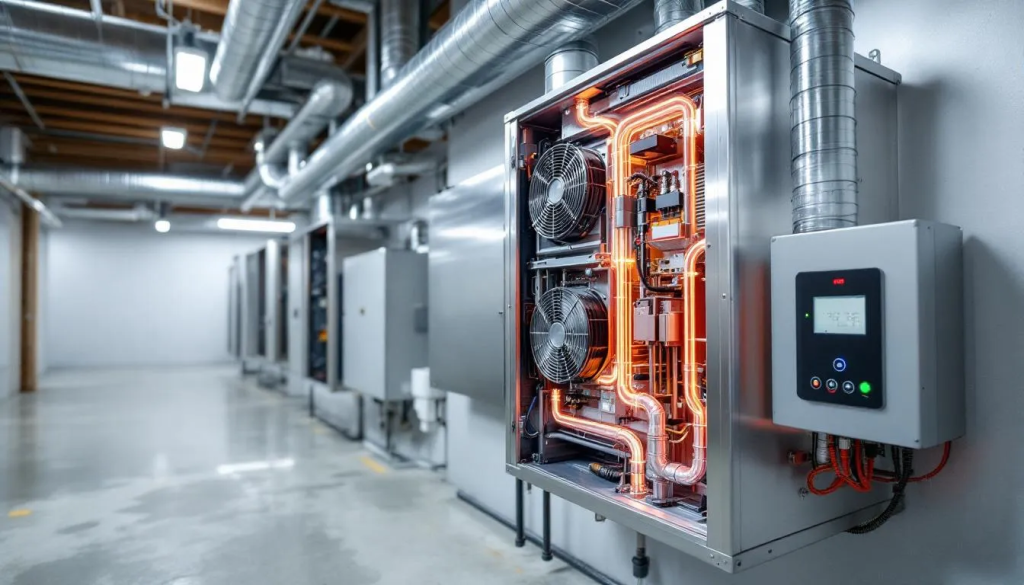
HVAC equipment consists of interconnected components that condition air, control airflow, and maintain desired indoor environmental conditions through coordinated mechanical operations. Each component serves specific functions within the complete system while depending on proper operation of related equipment.
Indoor HVAC Equipment
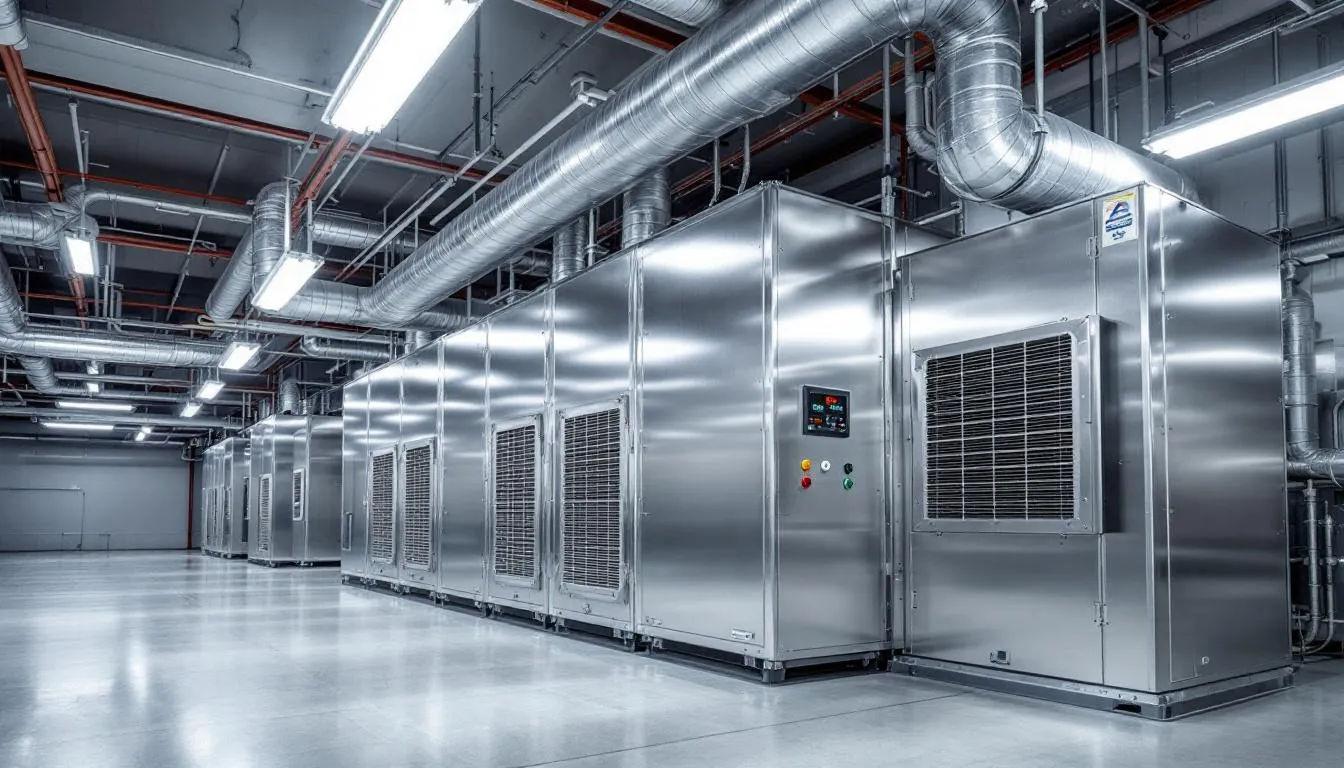
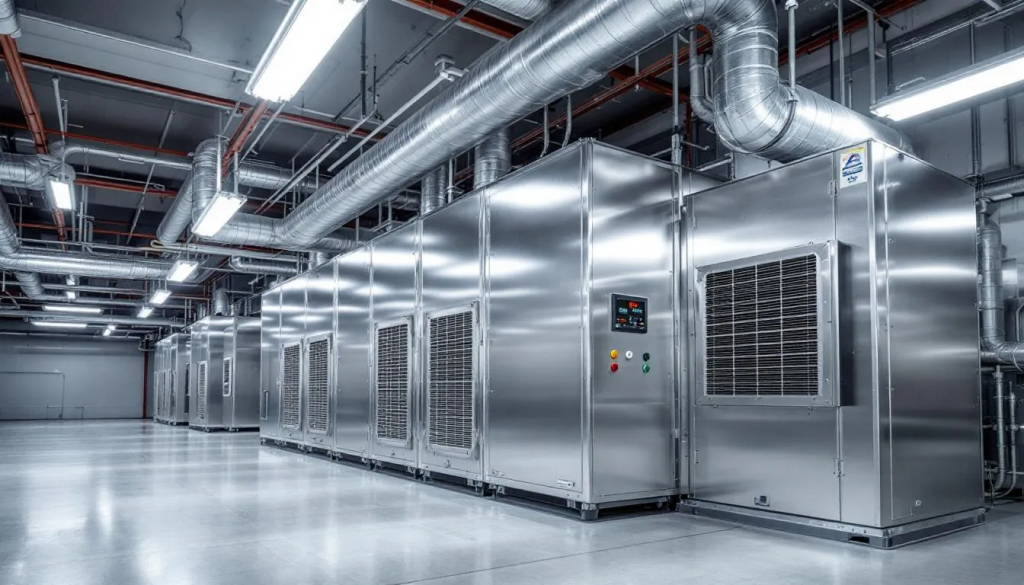
Air handling units serve as central distribution points containing evaporator coils, air filters, and blower systems that condition and circulate supply air throughout buildings. The air handler houses the indoor coil where refrigerant absorbs heat during cooling operations and releases heat during heat pump heating cycles.
Heat exchangers in gas furnaces transfer combustion heat to the air stream while separating combustion gases from conditioned air. Properly functioning heat exchangers ensure safe heating operations while maximizing energy transfer efficiency. Ductwork systems distribute conditioned air from air handlers to individual spaces while returning air to equipment for reconditioning.
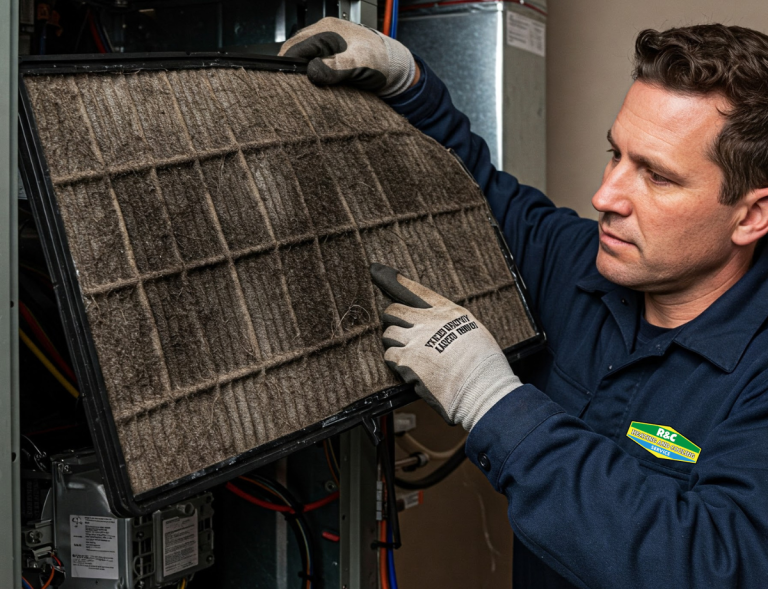
Air filtration systems remove particulates from circulating air through replaceable air filters. Higher-efficiency air cleaners capture smaller particles, improving indoor air quality while requiring more frequent maintenance to prevent airflow restrictions.
This connects to overall system function because indoor equipment directly affects indoor environment quality while serving as the interface between mechanical systems and occupied spaces.
Outdoor HVAC Units
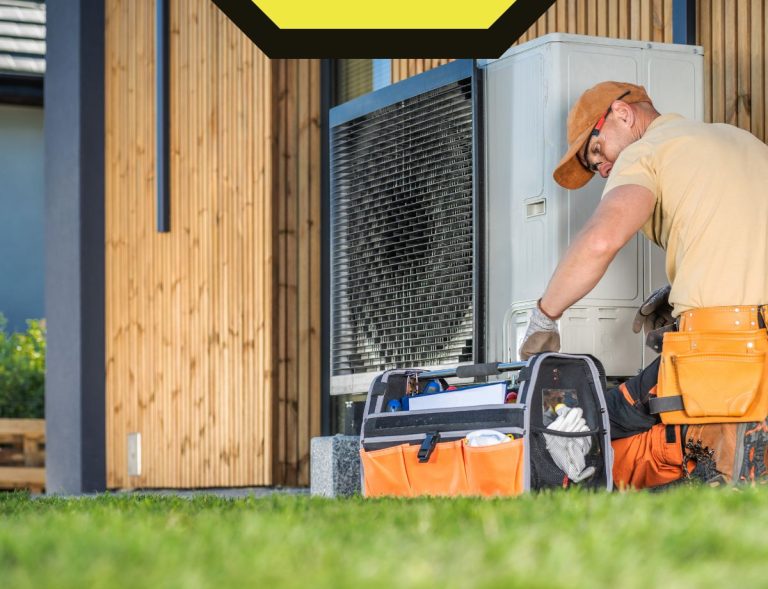
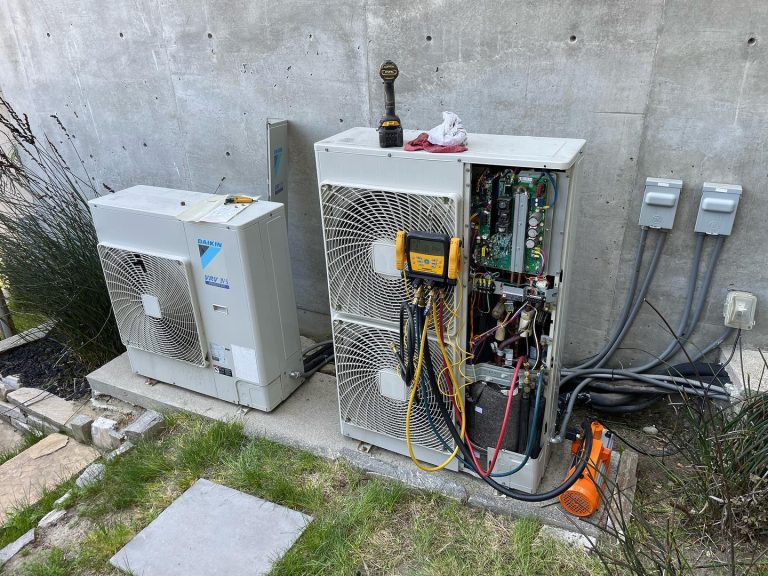
Outdoor units contain condenser coils, compressor pumps, and associated controls that reject heat during cooling operations and extract heat during heat pump operations. The outdoor unit works in coordination with the indoor unit through refrigerant lines that transport thermal energy between components.
Refrigerant lines connecting indoor and outdoor equipment enable heat transfer between air-conditioned spaces and outdoor air. Proper refrigerant line installation affects system efficiency and longevity while improper installation causes performance problems and equipment damage.
Condenser coil maintenance and proper outdoor unit placement ensure adequate heat rejection and system longevity. Outdoor units require adequate clearance from obstructions to maintain proper airflow across condenser coils.
Unlike indoor components that focus on air quality and distribution, outdoor equipment specializes in heat exchange with outdoor air and requires weather-resistant construction.
HVAC Control Systems
Control systems coordinate heating, cooling, and ventilation operations through thermostats, sensors, and automated controls that respond to changing indoor and outdoor conditions. Smart thermostats provide programmable operation, remote access, and energy management features that optimize system performance.
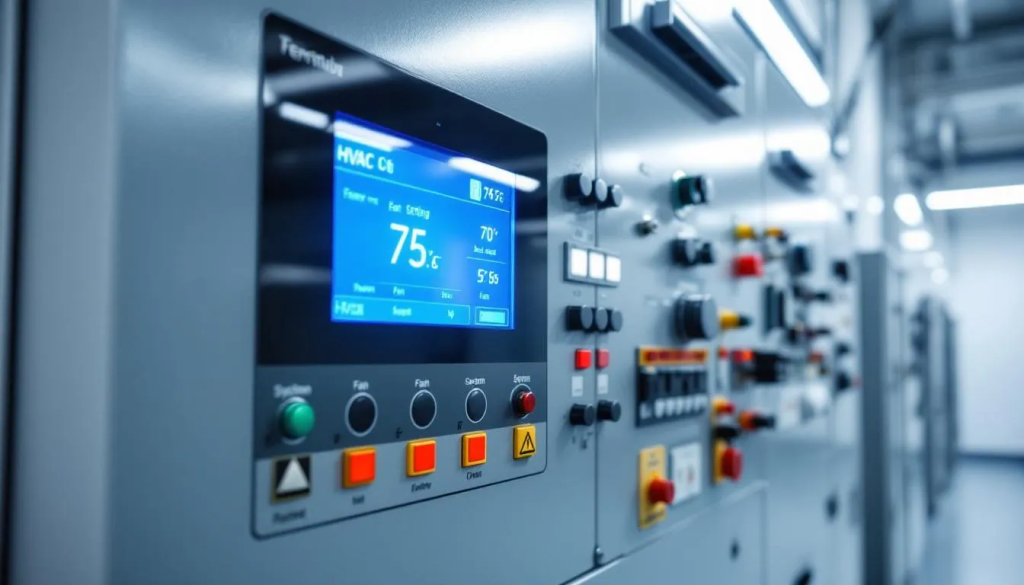
Temperature sensors throughout buildings enable zoning systems that provide individual space control while maintaining overall system efficiency. Advanced control systems monitor equipment operation and adjust system performance to maintain comfort while minimizing energy consumption.
Energy management systems in larger buildings coordinate hvac equipment operation with occupancy patterns and outdoor conditions to reduce operating costs while maintaining acceptable indoor air quality.
Key Points:
Indoor equipment conditions and distributes air throughout buildings
Outdoor equipment exchanges heat with outdoor air through refrigeration cycles
Control systems coordinate all components for optimal performance and efficiency
Transition: Understanding component functions enables informed evaluation of complete system types and their specific applications.
HVAC System Types and Selection Process
System selection depends on building characteristics, climate conditions, installation requirements, and performance priorities including energy efficiency, installation cost, and temperature control capabilities. Different system configurations offer distinct advantages for specific applications and building types.
Step-by-Step: Selecting Your HVAC System
When to use this process: New construction projects, complete system replacements, or major renovations requiring updated climate control systems.
Calculate heating and cooling loads: Perform Manual J load calculations to determine required system capacity based on building size, insulation, windows, and climate conditions.
Evaluate existing infrastructure: Assess electrical power capacity, available space for equipment installation, and existing ductwork condition to determine installation requirements.
Compare energy efficiency ratings: Review SEER2 cooling efficiency, HSPF2 heat pump efficiency, and AFUE heating efficiency ratings to estimate operating costs and energy savings potential.
Match system type to application: Select split systems for whole-building conditioning, packaged systems for space-constrained installations, or ductless systems for targeted conditioning without ductwork modifications.
Comparison: Split Systems vs. Packaged Systems vs. Ductless Systems
Feature | Split Systems | Packaged Systems | Ductless Systems |
|---|---|---|---|
Installation Requirements | Separate indoor/outdoor units, refrigerant lines | Single outdoor cabinet, minimal connections | Individual indoor units, no ductwork |
Energy Efficiency | High SEER2 ratings available | Moderate efficiency, space constraints | Highest efficiency, zone control |
Installation Cost | Moderate, existing ductwork | Lower upfront, limited capacity | Higher per zone, flexible installation |
Best Applications | Whole-house conditioning | Small homes, replacement projects | Room-specific control, retrofits |
Feature
Split Systems
Packaged Systems
Ductless Systems
Installation Requirements
Separate indoor/outdoor units, refrigerant lines
Single outdoor cabinet, minimal connections
Individual indoor units, no ductwork
Energy Efficiency
High SEER2 ratings available
Moderate efficiency, space constraints
Highest efficiency, zone control
Installation Cost
Moderate, existing ductwork
Lower upfront, limited capacity
Higher per zone, flexible installation
Best Applications
Whole-house conditioning
Small homes, replacement projects
Room-specific control, retrofits
Split systems offer the most versatile solution for residential applications with existing ductwork, providing efficient whole-building conditioning through separate indoor and outdoor components. Packaged systems simplify installation in space-constrained situations while ductless systems excel in applications requiring individual room control without ductwork modifications.
Transition: Even well-selected systems face common operational challenges that require specific solutions to maintain performance and efficiency.
Common HVAC Challenges and Solutions
Property owners frequently encounter temperature control, energy efficiency, and air quality issues that affect comfort and operating costs. Understanding common problems and proven solutions enables proactive system management and prevents minor issues from becoming major repairs.
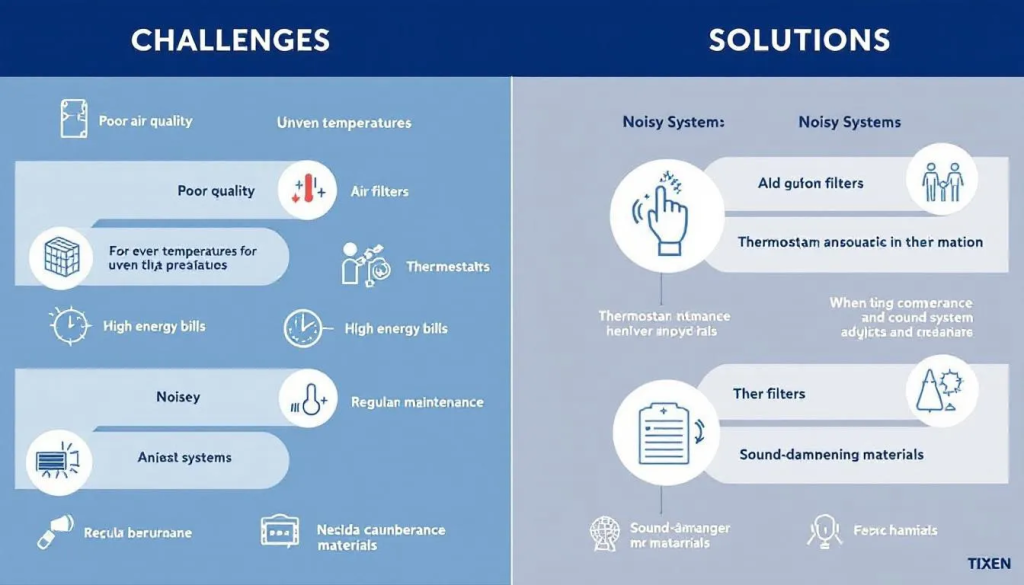
Challenge 1: Uneven Temperature Control Throughout Buildings
Solution: Install zoning systems with individual temperature controls, seal ductwork leaks, and balance airflow through proper damper adjustment.
Zoning systems enable different areas to maintain independent temperature settings while sharing central equipment. Professional ductwork sealing eliminates air leaks that cause temperature imbalances and reduce energy efficiency.
Challenge 2: High Energy Bills and Poor System Efficiency
Solution: Implement regular preventive maintenance, replace air filters monthly, and upgrade to high-efficiency equipment with improved energy efficiency ratios.
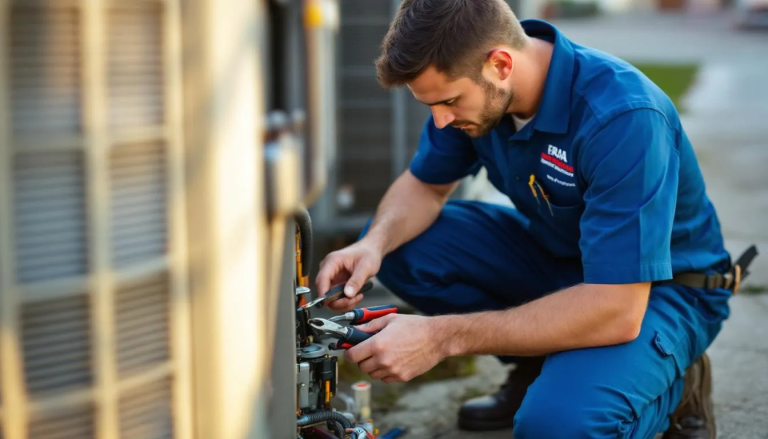
Regular maintenance by qualified hvac technicians ensures optimal system performance while dirty air filters reduce airflow and force equipment to work harder. Energy-efficient equipment significantly reduces long-term operating costs despite higher initial installation costs.
Challenge 3: Poor Indoor Air Quality and Humidity Issues
Solution: Install whole-house air cleaning systems, upgrade ventilation air introduction, and add humidity control equipment for comprehensive air quality management.
Advanced air filtration removes smaller particles while increased fresh air introduction dilutes indoor contaminants. Controlling humidity prevents mold growth and improves occupant comfort throughout varying seasonal conditions.
Transition: Addressing these challenges requires understanding available solutions and implementing appropriate system improvements for long-term performance.
Conclusion and Next Steps
HVAC systems represent complex mechanical systems that significantly impact building comfort, energy consumption, and indoor air quality through coordinated heating, cooling, and ventilation operations. Proper system selection, installation, and maintenance directly affect operating costs and equipment longevity while ensuring acceptable indoor environmental conditions.
To get started:
Schedule professional energy audit to assess current system performance and identify efficiency improvement opportunities
Research qualified air conditioning contractors with proper licensing and experience in your specific system type
Calculate potential energy savings from system upgrades using current utility costs and equipment efficiency ratings
Related Topics: Heat pump technology for year-round conditioning, smart home integration for automated climate control, and seasonal maintenance schedules for optimal system performance.
Additional Resources
Professional hvac industry organizations including ASHRAE provide technical standards for system design and installation. Energy efficiency rebates and financing programs help offset installation costs for high-efficiency equipment upgrades. Local hvac technicians offer system evaluation services and maintenance agreements for ongoing system care.