Switching to Heat Pumps: A Santa Monica Homeowner’s Guide
Living in Santa Monica means enjoying one of the most temperate climates in the world, with winter lows rarely dipping below 45°F and summer highs typically ranging from 75 to 82°F. However, as the city pushes toward its ambitious goal of carbon neutrality by 2050, many residents are rethinking how they heat and cool their homes. If you’re still relying on an aging gas furnace or a collection of noisy window AC units, it’s time to consider what HVAC professionals like R&C Heating and Cooling Service have been recommending to coastal homeowners: the electric heat pump.
This comprehensive guide draws on real installation experiences from Santa Monica neighborhoods, technical insights from local HVAC contractors, and the latest federal and state incentive programs to help you make an informed decision about upgrading your home’s heating and cooling system.
Why Santa Monica’s Climate is Perfect for Heat Pump Technology
Santa Monica sits in what HVAC professionals call the “Goldilocks zone” for heat pump performance. With only 10 to 15 days per year exceeding 85°F and practically no days dropping below 35°F, our coastal climate allows heat pumps to operate at peak efficiency year-round.
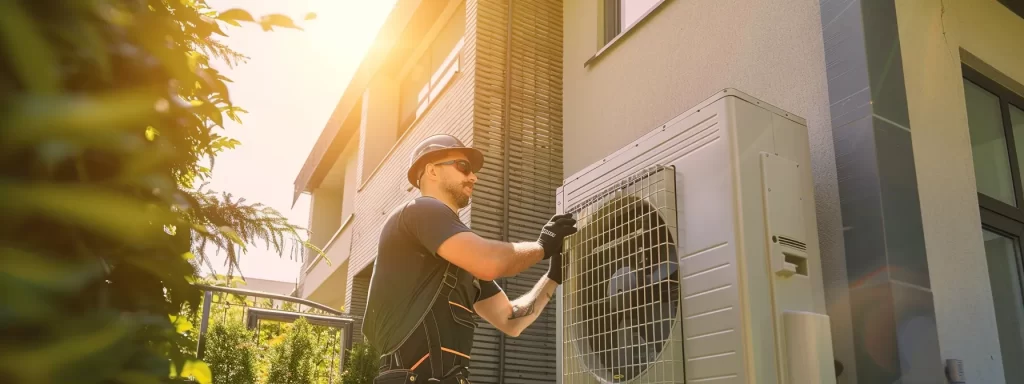
Unlike traditional furnaces that generate heat by burning natural gas, a heat pump doesn’t create heat—it moves it. In winter, it extracts warmth from the outside air (yes, even when it feels cold) and transfers it indoors. In summer, it reverses the process, pulling heat from your home and releasing it outside, functioning as a highly efficient air conditioner. Think of it as a single appliance that replaces both your furnace and your central air conditioning system, saving valuable space in the compact lots common throughout neighborhoods like Ocean Park, Sunset Park, and Wilshire Montana.
Real Performance in Santa Monica Conditions
According to local contractors, heat pumps achieve 300 to 400% efficiency in Santa Monica’s temperature range. This measurement, called the Coefficient of Performance (COP), means that for every dollar spent on electricity, the system delivers three to four dollars’ worth of heating or cooling. To put this in perspective: if you pay for one gallon of gas, it’s like getting four gallons’ worth of energy output. This efficiency holds steady in our climate because heat pumps work best when outdoor temperatures stay between 40°F and 80°F—precisely what Santa Monica experiences most of the year.
During the rare heat waves that push temperatures above 90°F, modern heat pumps continue to function effectively, though efficiency decreases slightly. For the two to three extreme heat days we experience annually, this minor reduction has negligible impact on annual energy costs.
The Benefits: Energy Efficiency, Air Quality, and Comfort
Dramatic Energy Savings
When homeowners in Santa Monica switch from a gas furnace and traditional central AC to a heat pump, they typically see a 40 to 50% reduction in HVAC energy consumption. Let’s look at a real-world example based on a typical 1,800 square foot home in the North of Montana neighborhood:
Before (Gas Furnace + Central AC): Annual energy costs of approximately $1,400, plus $200 in maintenance for two separate systems, totaling $1,600 per year.
After (Heat Pump): Annual energy costs drop to roughly $850, with $200 in maintenance for a single system, totaling $1,050 per year.
This represents annual savings of $550, which accumulates to $5,500 over ten years—and that’s before accounting for rising natural gas prices. With current Southern California Edison rates averaging $0.28 per kilowatt-hour, the economics favor electricity over gas combustion, especially as California continues transitioning toward renewable energy sources.
Superior Indoor Air Quality
By eliminating gas combustion from your home, you remove a significant source of indoor air pollutants. Gas furnaces produce nitrogen dioxide, carbon monoxide, and particulate matter—all of which can accumulate in tightly sealed modern homes. This is particularly important in Santa Monica, where ocean breezes and mild weather mean homeowners often keep windows closed to maintain comfortable indoor temperatures while running heating or cooling.
Heat pumps also provide better humidity control than traditional systems. Santa Monica’s marine layer brings morning moisture that can make homes feel damp and uncomfortable. Modern heat pumps with variable-speed compressors continuously adjust operation to maintain consistent temperatures and humidity levels, creating a more comfortable indoor environment without the temperature swings common with older systems that simply turn on and off.
Whisper-Quiet Operation
If you’ve lived with window AC units or an old central air system, you know the noise can be intrusive—often measuring 70 decibels or higher, comparable to a vacuum cleaner. Modern heat pumps operate at 40 to 60 decibels, roughly equivalent to normal conversation volume. This makes them ideal for Santa Monica’s densely populated neighborhoods where outdoor noise can disturb neighbors and reduce property values.
Coastal Durability Considerations
One critical factor for Santa Monica installations is salt air corrosion. The marine environment can significantly reduce the lifespan of HVAC equipment that lacks proper protection. When selecting a heat pump, work with experienced contractors who specify units with corrosion-resistant coatings, often marketed as “coastal protection packages.” These specialized finishes typically add $300 to $500 to equipment costs but can extend system life from 12 to 15 years up to 18 to 20 years. Reputable Heating Contractor in Santa Monica professionals will automatically recommend these protective features for coastal installations.
Choosing the Right Heat Pump System for Your Santa Monica Home
Ducted vs. Ductless Systems
Santa Monica homes vary dramatically in age and construction, which affects which heat pump type works best:
Ducted Heat Pumps: If your home already has ductwork from a central AC or forced-air furnace system, a ducted heat pump installation is typically straightforward. Most homes built after 1970 in areas like Mid-City and Wilshire Montana have existing ducts that can accommodate a heat pump with minimal modification. These systems provide uniform heating and cooling throughout the home and maintain a clean aesthetic since all equipment stays in the attic or garage.
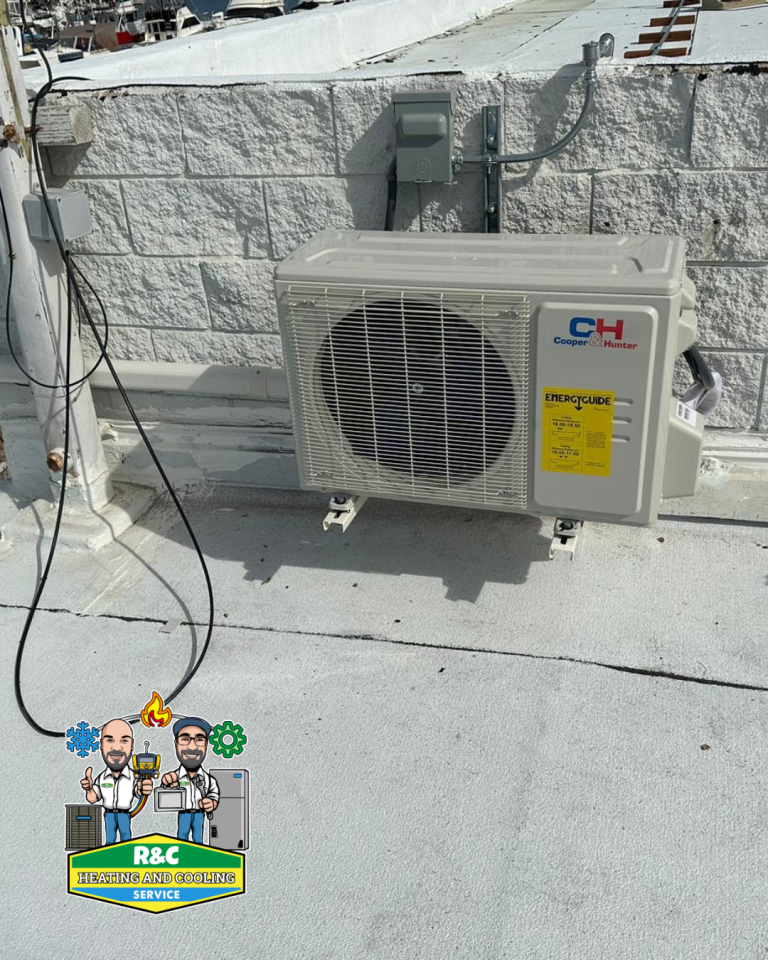
Ductless Mini-Split Systems: Older bungalows in Ocean Park or craftsman homes in Sunset Park often lack ductwork. For these properties, ductless mini-split heat pumps offer an excellent solution. These systems consist of one outdoor unit connected to multiple indoor air handlers mounted on walls in different rooms. While some homeowners initially worry about the appearance of wall-mounted units, modern designs are sleek and unobtrusive. The major advantage: no need to tear into walls and ceilings to install ductwork, which can save $5,000 to $10,000 in construction costs.
Sizing: Getting It Right
Proper sizing is crucial for heat pump performance and efficiency. An oversized unit costs more upfront and cycles on and off frequently, reducing efficiency and comfort. An undersized unit struggles to maintain temperature during peak demand periods.
Professional HVAC contractors use Manual J load calculations—the industry standard developed by the Air Conditioning Contractors of America (ACCA)—to determine the right size. For Santa Monica homes, typical sizing guidelines are:
- 1,200 to 1,500 square feet: 2 to 2.5 ton system
- 1,500 to 2,000 square feet: 2.5 to 3 ton system
- 2,000 to 2,500 square feet: 3 to 3.5 ton system
These are general guidelines only. Actual requirements depend on insulation levels, window quality, ceiling height, sun exposure, and how many people occupy the home. Always insist that your contractor performs a proper load calculation rather than simply matching the tonnage of your old system.
Efficiency Ratings to Look For
For Santa Monica’s climate (International Energy Conservation Code Zone 3), look for heat pumps with these minimum ratings:
- SEER2 (Seasonal Energy Efficiency Ratio 2): Minimum 16, premium models 20+
- HSPF2 (Heating Seasonal Performance Factor 2): Minimum 8.5, premium models 10+
Note that SEER2 and HSPF2 are updated testing standards introduced in 2023. Older SEER and HSPF ratings on equipment manufactured before 2023 use different testing protocols and aren’t directly comparable. Premium brands like Carrier Infinity, Daikin Fit, and Mitsubishi Hyper-Heat achieve SEER2 ratings above 20, delivering exceptional efficiency that translates to lower operating costs over the system’s 15 to 20 year lifespan.
The Installation Process: What Santa Monica Homeowners Can Expect
Timeline from Decision to Completion
Based on typical Santa Monica installations, here’s a realistic timeline:
Week 1—Energy Audit and Load Calculation: A qualified contractor visits your home to assess existing systems, measure spaces, evaluate insulation, and perform Manual J load calculations. Cost: $200 to $400, often credited toward installation if you proceed.
Week 2—Equipment Selection and Proposal: The contractor presents equipment options with detailed cost breakdowns, efficiency ratings, and warranty information. This is when you’ll discuss ducted versus ductless options, coastal protection packages, and any necessary electrical upgrades.
Week 3—Permit Submission: California requires Title 24 energy compliance documentation for HVAC installations. Your contractor submits permit applications to Santa Monica’s Building and Safety Department. Typical approval time: 5 to 10 business days.
Week 4 to 5—Installation: For straightforward replacements using existing ductwork, installation takes 2 to 3 days. More complex projects involving ductwork modification or electrical panel upgrades can extend to 4 to 5 days. Professional installers will protect your flooring, minimize disruption, and clean up thoroughly each day.
Week 5 to 6—Inspection and Startup: The city inspector verifies proper installation and compliance with building codes. After approval, the contractor completes system startup, verifies refrigerant charge, tests all functions, and trains you on operation and maintenance.
Total timeline: 4 to 6 weeks from initial consultation to completed installation. Planning ahead, especially before summer or winter peak seasons, helps ensure contractor availability and faster permit processing.
Common Installation Challenges in Santa Monica Homes
Electrical Panel Capacity: Heat pumps require dedicated 240-volt circuits with 40 to 60 amp capacity. Homes built before 1980—common throughout Santa Monica—often have 100 or 125 amp electrical panels that lack capacity for additional major appliances. Panel upgrades cost $1,500 to $3,000 but are necessary for safe, code-compliant installations. Approximately 30 to 40% of older Santa Monica homes require panel upgrades when adding heat pumps.
Limited Attic or Garage Space: Compact lot sizes mean some homes lack adequate space for indoor air handler units. Creative solutions include outdoor placement with weather-protected enclosures, closet installations, or ductless mini-split systems that eliminate the need for large indoor components.
Homeowners Association Approval: Many Santa Monica condominiums and planned communities have architectural review committees that must approve exterior equipment installations. Submit applications early in the planning process to avoid delays. Most HOAs approve heat pumps readily, especially as sustainability becomes a priority, but processing can take 30 to 45 days.
Financial Incentives: Making the Investment Affordable
Federal Tax Credits Under the Inflation Reduction Act
The federal government offers substantial tax credits for heat pump installations through December 31, 2032. Under IRS Section 25C, homeowners can claim 30% of equipment and installation costs, up to a maximum credit of $2,000.
For a typical $15,000 installation, you would calculate: $15,000 × 30% = $4,500. However, the credit caps at $2,000, so you would claim $2,000 on your federal tax return for the year of installation. This is a tax credit, not a deduction—meaning it directly reduces your tax liability dollar for dollar, making it more valuable than a standard deduction.
To qualify, the heat pump must meet ENERGY STAR efficiency requirements, which all modern heat pumps designed for California easily exceed. Keep all receipts and manufacturer certification statements for your tax records.
TECH Clean California State Rebates
California’s Technology and Equipment for Clean Heating (TECH) program provides direct rebates—money you receive at the time of installation, not tax time. Rebate amounts depend on household income:
- Low-Income Households: Up to $8,000 for heat pump equipment
- Moderate-Income Households: Up to $3,000 for heat pump equipment
- All Income Levels: Additional incentives available for electrical panel upgrades and wiring improvements
Income limits vary by household size and are updated annually. As of 2025, moderate-income limits for Santa Monica (Los Angeles County) are approximately $100,000 for a family of four. Check current eligibility and apply at techcleanca.com before beginning your project. TECH incentives are first-come, first-served and can be exhausted, so applying early in the year maximizes your chances of receiving funding.
Southern California Edison Rebates
Southern California Edison offers additional rebates for high-efficiency equipment installations. These stack with federal and state incentives, though specific amounts vary based on current program funding and equipment efficiency levels. Check sce.com/residential/rebates-savings for current offerings. Local utility rebates typically range from $500 to $1,500 for qualifying heat pump systems.
Real-World Cost Example
Here’s how incentives apply to a typical Santa Monica installation:
Base Cost: $16,000 (equipment, labor, permits, electrical work)
Federal Tax Credit: -$2,000
TECH Clean CA Rebate (moderate-income): -$3,000
SCE Rebate: -$1,000
Your Net Cost: $10,000
With annual energy savings of $550, the payback period is approximately 18 years before incentives but drops to just 7 to 9 years after accounting for all available programs. When you factor in avoided future costs—you won’t need to replace a failing furnace in 5 to 10 years—the economics become even more compelling.
Local Support: The City of Santa Monica and QuitCarbon Partnership
Santa Monica is making electrification easier through its partnership with QuitCarbon, a nonprofit organization that provides free, expert guidance to residents considering home electrification projects. According to the City of Santa Monica’s Climate Action and Adaptation Plan, residential buildings account for 15% of citywide greenhouse gas emissions, making home electrification a critical strategy for achieving carbon neutrality goals.
How the Program Works
Visit the City of Santa Monica’s Electrification Portal to access free services:
- Personalized Heat Pump Plans: QuitCarbon advisors analyze your home’s specific needs and create customized recommendations including equipment types, sizing, and installation considerations.
- Vetted Contractor Network: Access a list of pre-screened, licensed HVAC contractors experienced with Santa Monica installations and familiar with local permitting requirements.
- Incentive Navigation: Advisors help you identify all applicable federal, state, and local incentives, complete applications, and maximize your savings.
- Installation Support: Get answers throughout the installation process, from initial planning through final inspection.
This program removes the confusion and uncertainty that often prevents homeowners from moving forward with electrification projects. Rather than spending hours researching contractors, equipment options, and incentive programs, you get expert guidance tailored to your specific situation—completely free.
Selecting a Qualified HVAC Contractor
Choosing the right contractor is as important as selecting the right equipment. Here’s what to look for:
Essential Qualifications
California C-20 HVAC License: All contractors performing HVAC work must hold this license. Verify license status and check for complaints at cslb.ca.gov (California Contractors State License Board).
NATE Certification: North American Technician Excellence certification demonstrates that technicians have passed rigorous competency exams. Look for contractors with NATE-certified installers, particularly those with heat pump specialization credentials.
Manufacturer Training: Premium heat pump brands require specialized training. Contractors authorized as Mitsubishi Diamond Dealers, Carrier Factory Authorized Dealers, or Daikin Comfort Pros have demonstrated expertise with those specific product lines.
Local Experience: Contractors familiar with Santa Monica’s permitting process, common housing types, and coastal considerations will complete projects more efficiently and avoid problems. For expert Heating Installation services from professionals who understand local requirements, working with established Santa Monica contractors provides peace of mind.
Getting Quality Quotes
Request quotes from at least three contractors. Each proposal should include:
- Detailed equipment specifications (exact model numbers, efficiency ratings)
- Manual J load calculation documentation
- Complete scope of work (permits, electrical, ductwork modifications, cleanup)
- Warranty coverage for equipment and labor
- Timeline from start to completion
- Payment schedule (never pay in full upfront)
Be wary of quotes significantly lower than others—they often indicate substandard equipment, unlicensed subcontractors, or incomplete work scope that leads to change orders later. The lowest price rarely delivers the best value for a system you’ll depend on for 15 to 20 years.
Red Flags to Avoid
- Pressure to sign immediately or “today-only” pricing
- Unwillingness to provide references from recent Santa Monica installations
- No mention of permits or Manual J calculations
- Requests for full payment upfront
- Vague warranties or no warranty information
- Unlicensed or uninsured contractors
Maintenance and Long-Term Performance
Heat pumps are remarkably reliable and require less maintenance than separate furnace and AC systems, but regular care ensures optimal performance and longevity.
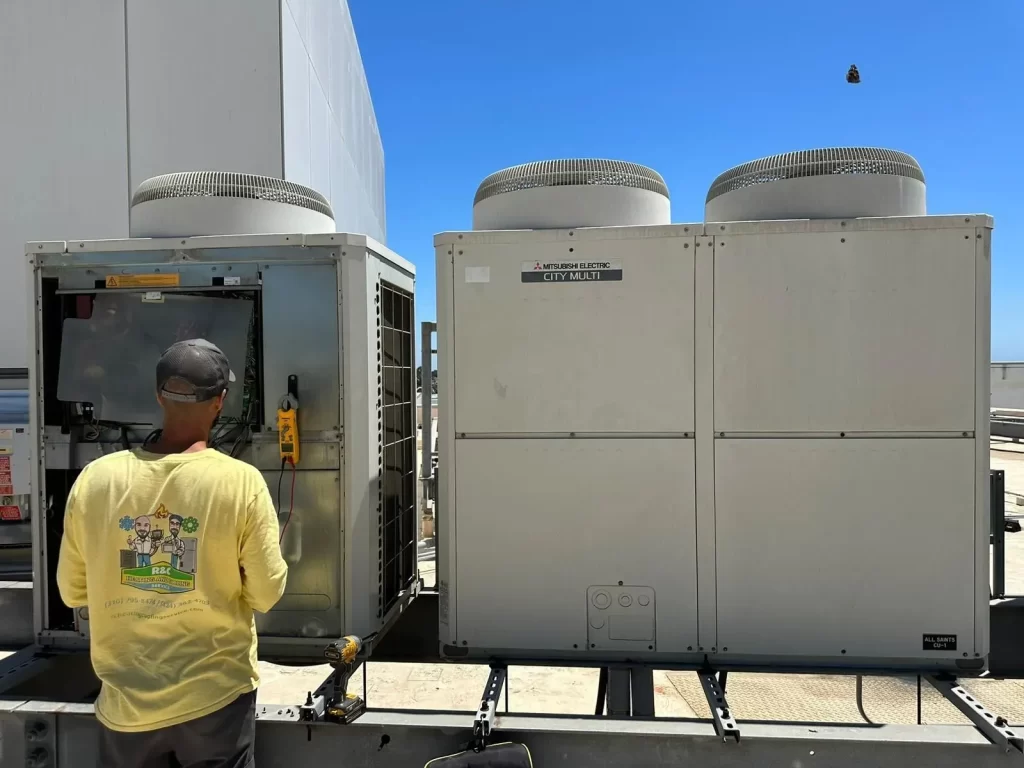
Homeowner Maintenance Tasks
Air Filter Changes: Replace or clean filters every 1 to 3 months depending on usage and indoor air quality. Standard pleated filters cost $5 to $15 each. Homes with pets, allergies, or near construction may require monthly changes. Clogged filters reduce efficiency by 15% or more and force the system to work harder, increasing wear and energy consumption.
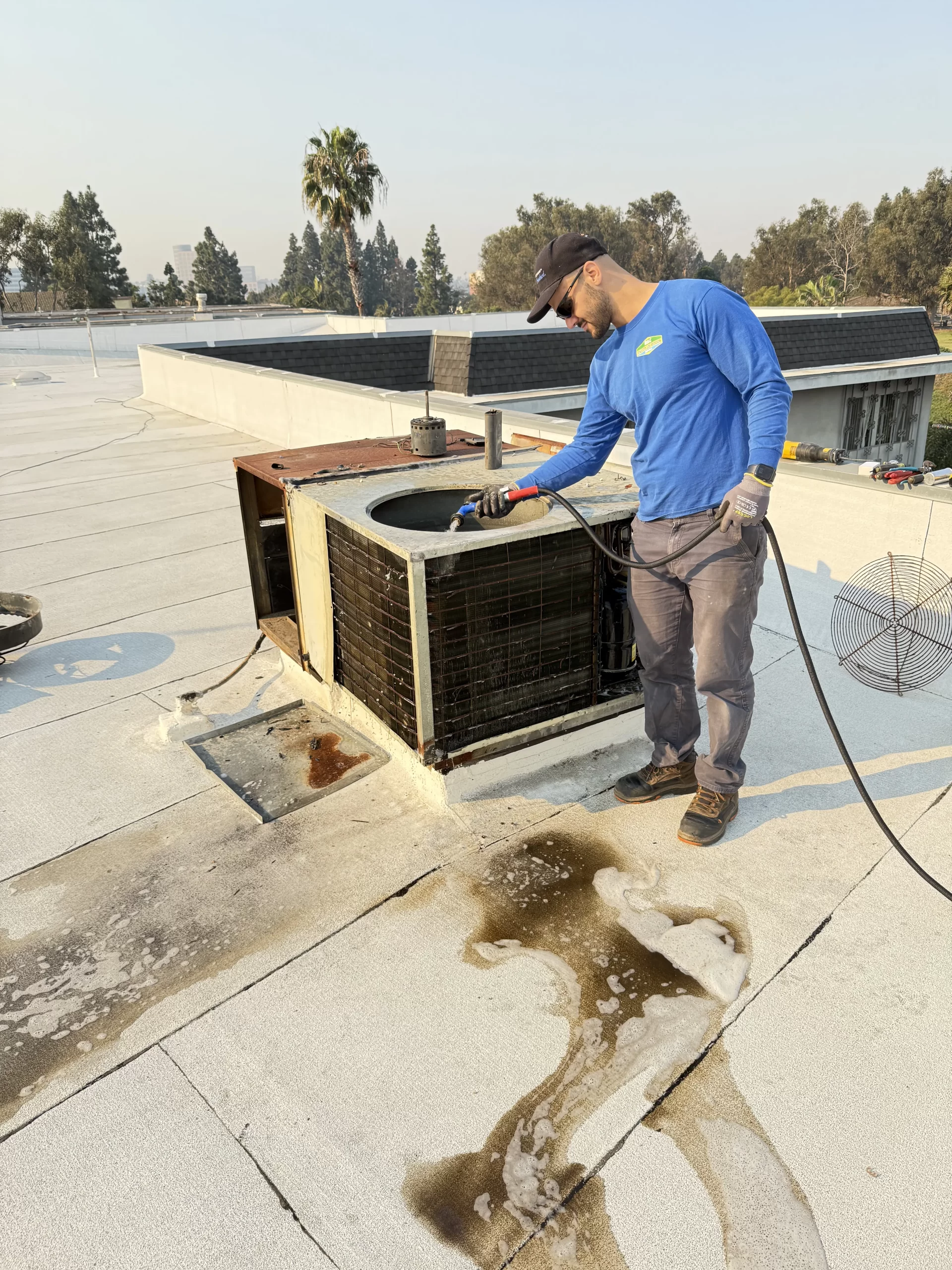
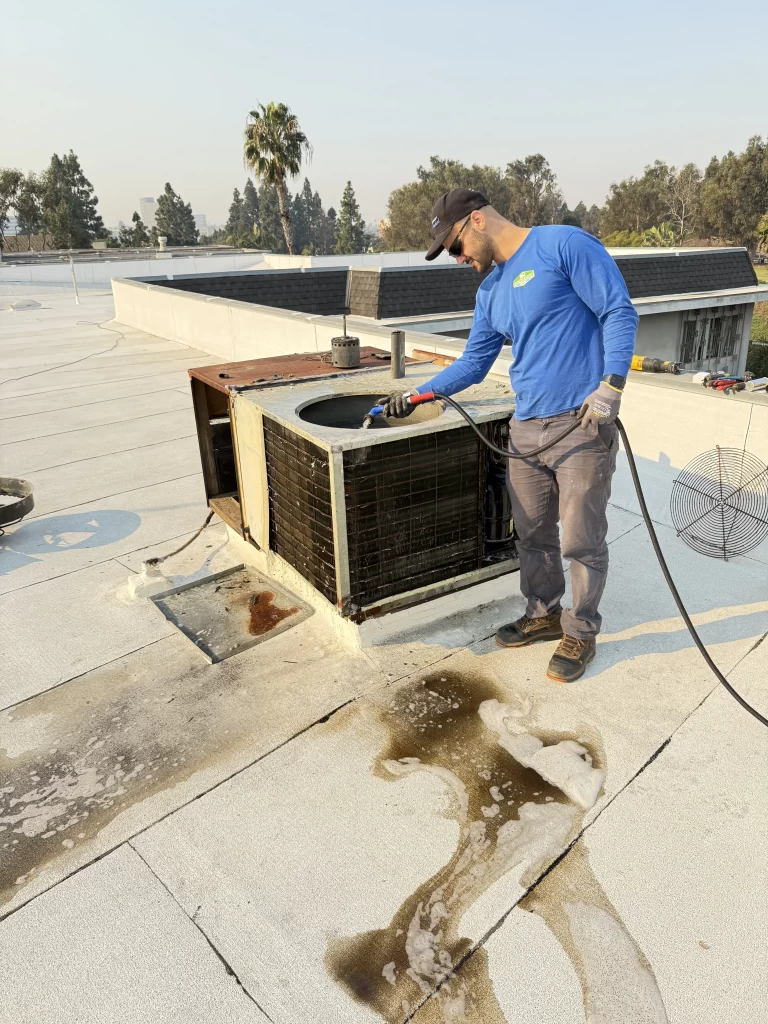
Outdoor Unit Care: Keep the area around your outdoor unit clear of leaves, debris, and vegetation. Maintain at least 2 feet of clearance on all sides for proper airflow. In Santa Monica’s coastal environment, rinse the outdoor coils gently with a garden hose every few months to remove salt buildup and dust.
Indoor Unit Inspection: Check indoor vents and registers monthly to ensure they’re open and unobstructed by furniture or curtains. Poor airflow reduces system efficiency and comfort.
Professional Maintenance
Schedule annual professional maintenance each spring before cooling season begins. A thorough service visit includes:
- Refrigerant level check and adjustment
- Electrical connection inspection and tightening
- Condensate drain cleaning
- Coil cleaning (especially important in coastal environments)
- Thermostat calibration
- Airflow measurement and adjustment
- Full system performance testing
Annual maintenance costs $150 to $250 and typically extends system life by 3 to 5 years while maintaining peak efficiency. Many contractors offer maintenance plans that include priority service, discounted repairs, and annual tune-ups for a flat annual fee. For ongoing support and service, establishing a relationship with a reliable provider for Heating Repair ensures quick response when issues arise.
Expected Lifespan and Replacement Considerations
With proper maintenance, heat pumps in Santa Monica’s mild climate typically last 15 to 20 years. Coastal units with corrosion-resistant coatings that receive regular coil cleaning can reach the upper end of this range or beyond. Compare this to gas furnaces (15 to 20 years) plus separate AC units (12 to 15 years), and you’re consolidating two systems into one with similar or longer overall lifespan.
As your heat pump ages, watch for these signs that replacement may be approaching:
- Rising energy bills despite consistent usage
- Frequent repairs or service calls
- Uneven heating or cooling in different rooms
- Strange noises during operation
- Difficulty maintaining comfortable temperatures
- Age over 15 years with original components
When these issues appear, consult with your HVAC contractor about whether repair or replacement makes better financial sense. Generally, if repair costs exceed 50% of replacement cost and the system is over 12 years old, replacement delivers better long-term value.
Common Questions and Concerns Addressed
Will a Heat Pump Work During Santa Monica’s Rare Heat Waves?
Yes, absolutely. Modern heat pumps maintain full cooling capacity up to 95°F outdoor temperatures—well above Santa Monica’s typical summer highs. During the 2 to 3 days per year when temperatures exceed 90°F, your heat pump continues operating effectively, though efficiency decreases slightly. This minor reduction has negligible impact on annual costs and comfort.
What About Electrical Panel Requirements?
Heat pumps require dedicated 240-volt circuits similar to electric dryers or ranges. Homes built after 1980 usually have adequate panel capacity. For older homes with 100 or 125 amp panels, upgrades to 200 amps are often necessary. While panel upgrades add $1,500 to $3,000 to project costs, they also increase home value and prepare your electrical system for other potential upgrades like electric vehicle chargers or kitchen renovations.
How Noisy Are Heat Pumps Really?
Modern heat pumps operate at 40 to 60 decibels—roughly the sound level of normal conversation or light rainfall. Compare this to older central AC units at 70+ decibels (similar to a vacuum cleaner) or window units that can exceed 80 decibels. Variable-speed models are even quieter, ramping up and down gradually rather than turning on at full blast. Most homeowners report that their heat pumps are significantly quieter than their previous systems.
Ducted or Ductless—Which is Right for My Home?
If you have existing ductwork in good condition, ducted systems typically cost less and provide uniform comfort throughout your home. If you lack ductwork or have an older home where installing ducts would be prohibitively expensive or destructive, ductless mini-splits offer excellent performance with lower installation costs. Ductless systems also provide room-by-room temperature control, which some homeowners prefer. Your contractor’s load calculation and home assessment will determine which option makes most sense for your specific situation.
What About Supplemental Heating for Cold Days?
In Santa Monica’s climate, supplemental heating is rarely necessary. Days below 40°F occur less than 5 times per year, and modern cold-climate heat pumps maintain full heating capacity down to 5°F. For the exceptionally rare cold snap, your heat pump handles the load without assistance. If you prefer backup heat for peace of mind, electric resistance heating strips can be integrated into ducted systems for minimal additional cost, though you’ll likely never need them in our coastal climate.
Taking the Next Step: Your Action Plan
Ready to move forward with a heat pump installation? Here’s your step-by-step action plan:
- Schedule Free Consultation: Contact the City of Santa Monica’s QuitCarbon partnership for personalized guidance and a customized heat pump plan.
- Check Incentive Eligibility: Verify your household income eligibility for TECH Clean California rebates at techcleanca.com and review federal tax credit requirements.
- Request Energy Audit: Southern California Edison offers free or low-cost home energy audits that identify opportunities to improve efficiency before installing new equipment.
- Get Three Quotes: Request detailed proposals from at least three licensed, NATE-certified contractors with heat pump experience.
- Verify Electrical Capacity: If your home was built before 1980, have an electrician inspect your electrical panel to determine if upgrades are needed.
- Apply for Incentives: Submit TECH Clean CA and utility rebate applications before beginning work—some programs require pre-approval.
- Schedule Installation: Book Appointment with your chosen contractor, allowing 4 to 6 weeks for the complete process including permits and inspections.
Conclusion: Leading the Way to a Cleaner Future
Switching to a heat pump isn’t just an environmental decision—though eliminating gas combustion from your home significantly reduces your carbon footprint and supports Santa Monica’s carbon neutrality goals. It’s also a practical decision that enhances comfort, improves indoor air quality, reduces noise, and delivers substantial energy savings over decades of reliable operation.
Santa Monica’s mild coastal climate provides ideal conditions for heat pump technology to operate at peak efficiency year-round. With federal tax credits up to $2,000, state rebates reaching $8,000 for income-qualified households, utility incentives, and free expert guidance through the City’s QuitCarbon partnership, there has never been a better time to make the switch.
The transition requires an upfront investment, but with net costs after incentives ranging from $7,000 to $13,000 and annual energy savings of $550 or more, most homeowners achieve payback within 7 to 9 years—all while enjoying superior comfort and peace of mind knowing they’re using clean, efficient technology.
Whether you live in a historic Ocean Park bungalow, a mid-century Sunset Park ranch, or a modern Wilshire Montana home, heat pump technology adapts to your specific needs. By working with qualified local contractors who understand coastal installation requirements and utilizing available resources and incentives, you can confidently lead the way in Santa Monica’s transition to a cleaner, more sustainable future.
The question isn’t whether heat pumps work in Santa Monica—they’re perfectly suited to our climate. The question is whether you’re ready to enjoy lower energy bills, better indoor air quality, and quieter operation while reducing your environmental impact. With comprehensive support available every step of the way, the answer for thousands of Santa Monica homeowners has been a resounding yes.