The Silent Threat: How Salt Air Impacts Your Santa Monica Heating System
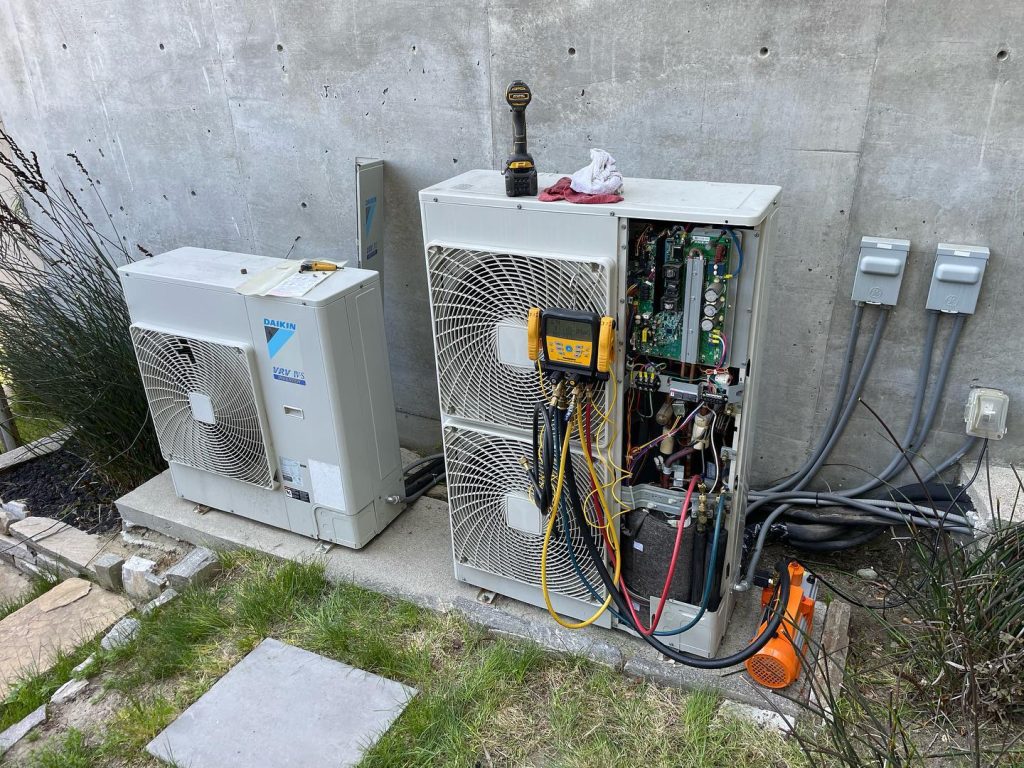
Living in Santa Monica offers unparalleled ocean views and refreshing coastal breezes, but for your home’s heating and cooling system, this beautiful seaside lifestyle comes with a hidden cost. While most homeowners focus on interior comfort and seasonal tune-ups, a relentless chemical battle is happening outside your home every single day—one that can cut your HVAC system’s lifespan in half.
As a Heating contractor in Santa Monica, we’ve seen firsthand how the very thing residents love most about coastal living—that salty ocean mist—becomes the primary enemy of heating system components. Understanding this threat and taking proactive steps can save you thousands of dollars in premature equipment replacement.
The Science Behind Coastal Corrosion: Why Salt Air Is Your HVAC’s Worst Enemy
That refreshing ocean breeze carries more than just the smell of the sea. Microscopic salt particles become airborne and travel inland, sometimes reaching several miles from the coastline. In Santa Monica, homes from Ocean Park to North of Montana all face varying degrees of salt exposure, with properties closer to the Santa Monica Pier experiencing the most aggressive conditions.
When these salt particles settle on your heating system’s exterior components—the condenser unit, heat pump, or furnace housing—they don’t just sit harmlessly on the surface. In the presence of moisture from morning dew, fog, or humidity, salt triggers an accelerated form of galvanic corrosion. This electrochemical process occurs when dissimilar metals (like the copper refrigerant tubes and aluminum fin stock in your system) are in contact while exposed to an electrolyte solution—in this case, saltwater.
The Components Most Vulnerable to Salt Damage
Your HVAC system contains several components particularly susceptible to coastal corrosion:
Aluminum Fins: The thin aluminum fins surrounding your condenser coils are typically only 0.004 to 0.006 inches thick. These delicate components are responsible for heat exchange, but salt creates microscopic pitting that gradually weakens the metal structure. Over time, fins can perforate completely, stick together, or crumble, dramatically reducing your system’s efficiency.
Copper Coils and Tubing: While copper naturally develops a protective patina, salt accelerates deterioration and can cause pinhole leaks in refrigerant lines. According to the U.S. Department of Energy, even small refrigerant leaks can reduce system efficiency by up to 20% and lead to compressor failure.
Electrical Connections and Controls: Salt buildup on electrical terminals creates resistance and heat, leading to connection failures. We’ve serviced units in Ocean Park where salt corrosion had completely compromised wire connections in systems less than five years old.
The True Cost: Why Santa Monica Systems Face Accelerated Wear
Inland communities like Pasadena or the San Fernando Valley contend with dust, heat, and occasional smog, but Santa Monica residents face an entirely different set of challenges. The constant salt exposure means your system experiences wear patterns dramatically different from inland installations.
In our fifteen years providing HEATING REPAIR services throughout Santa Monica, we’ve documented a clear pattern: heating and cooling systems within one mile of the ocean typically last 8 to 11 years with standard maintenance protocols, compared to 15 to 20 years for comparable systems in inland areas. This represents a potential loss of nearly half your investment’s expected lifespan.
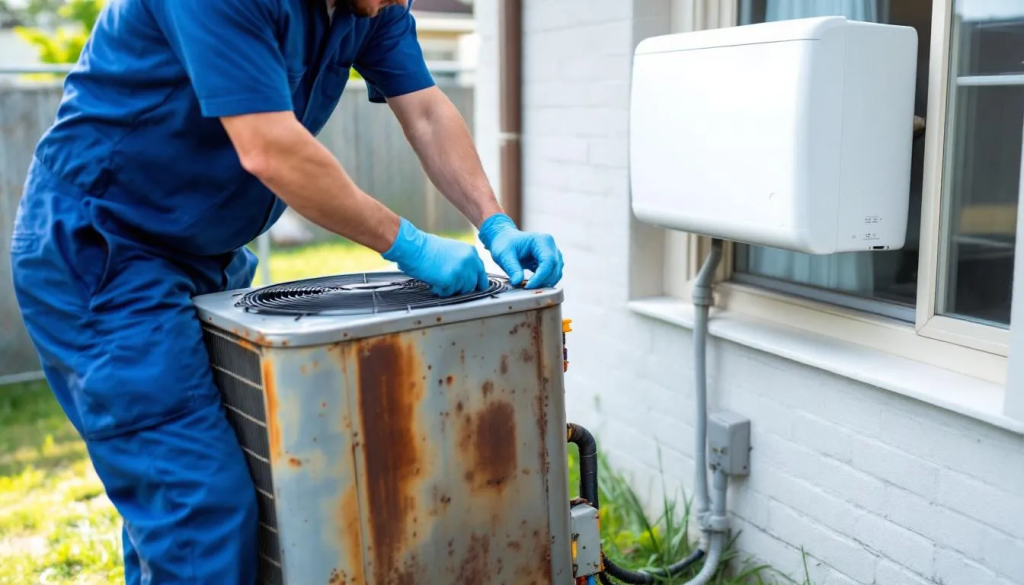
The City of Santa Monica’s sustainability programs emphasize energy-efficient systems, but efficiency means nothing if your equipment fails prematurely. A corroded system doesn’t just stop working—it deteriorates gradually, losing efficiency month by month. You might notice your energy bills creeping upward by 15-30% as corroded fins block airflow and damaged coils struggle to transfer heat effectively.
Real-World Impact: What We See in Santa Monica Homes
Last winter, we responded to a service call for a home on Fourth Street, just four blocks from the beach. The homeowner complained about inadequate heating despite the system running constantly. Upon inspection, we found extensive salt corrosion on a seven-year-old unit. The aluminum fins showed approximately 35% deterioration—damage we’d typically expect to see on a 15-year-old system in an inland location. The homeowner faced a choice between a $3,200 compressor replacement or a $9,500 full system replacement, when the unit should have had another eight years of reliable service.
This scenario isn’t unique. Properties south of Wilshire Boulevard and west of Lincoln consistently show accelerated corrosion patterns, with measurable damage appearing 18 to 24 months earlier than comparable systems north of Montana Boulevard.
Why Standard Maintenance Schedules Fall Short in Coastal Areas
Most HVAC manufacturers and contractors recommend annual maintenance visits, and this schedule works well for inland properties. However, in Santa Monica’s marine environment, once-yearly service simply isn’t frequent enough to stay ahead of salt accumulation and corrosion.
Professional HVAC contractors familiar with coastal conditions—including our team at R&C Heating and Cooling Service—typically recommend bi-annual inspections for Santa Monica properties. These spring and fall service calls specifically target salt-related issues:
- Thorough coil cleaning to remove salt deposits before they cause permanent damage
- Inspection for early signs of metal pitting or fin deterioration
- Electrical connection testing to identify resistance caused by salt buildup
- Protective coating inspection and reapplication if needed
- Refrigerant level verification to catch small leaks early
The investment in bi-annual maintenance—typically $300 to $450 annually for both visits—pales in comparison to the cost of premature system replacement or emergency repairs during the coldest nights of winter.
Proactive Defense Strategies: Protecting Your Investment from Salt Damage
1. The Monthly Gentle Rinse Technique
SAFETY FIRST: Before performing any maintenance on your HVAC system, turn off power at the circuit breaker and wait at least 10 minutes for capacitors to discharge. Never spray water while the unit is operating or directly into electrical components. If you’re uncomfortable performing this maintenance, contact a licensed professional. Improper cleaning may void your manufacturer’s warranty.
Once monthly, particularly after windy days or during periods of high surf, use a standard garden hose with a gentle spray setting to rinse your exterior unit. Start from the top and work downward, focusing on the aluminum fins and external casing. The goal is to wash away accumulated salt crystals before they bond with the metal and initiate corrosion.
This simple 10-minute maintenance task can significantly extend your system’s lifespan. However, avoid these common mistakes:
- Never use a pressure washer—high pressure bends delicate aluminum fins and can force water past seals into electrical components
- Don’t rinse during the hottest part of the day when rapid evaporation leaves salt residue
- Avoid spraying directly at fan motors, electrical panels, or control boxes
- Allow adequate time for the unit to dry completely before restoring power
Always consult your system’s owner manual before performing maintenance, as specific manufacturer recommendations may vary.
2. Professional Anti-Corrosive Coatings: Your First Line of Defense
If you’re installing a new heating and cooling system in Santa Monica, requesting anti-corrosive coatings should be non-negotiable. These protective layers act as a barrier between salt particles and the metal components of your system.
Two primary coating types dominate the coastal HVAC market:
Epoxy-Based Coatings (like Blygold): These factory-applied or aftermarket coatings meet ASTM B117 salt spray testing standards, demonstrating resistance to over 5,000 hours of continuous salt exposure—compared to just 500 hours for untreated aluminum. The coating process involves thoroughly cleaning the coils, then applying multiple layers of a specially formulated epoxy that bonds at the molecular level with the metal substrate. Investment ranges from $800 to $1,500 for most residential systems.
Phenolic Coatings: These polymer-based protective layers offer excellent corrosion resistance and can be applied to existing systems in some cases. They provide a hard, durable surface that repels salt and moisture while allowing efficient heat transfer.
The return on investment is straightforward: spending $1,200 on protective coatings can extend your system’s lifespan by 5 to 8 years, representing savings of $8,000 to $15,000 in avoided premature replacement costs.
3. Strategic Placement and Shielding
While your HVAC unit requires adequate airflow to function efficiently, strategic placement can reduce direct salt spray exposure during high-wind conditions. Consider these placement strategies:
Leeward Positioning: Install the unit on the side of your home that faces away from prevailing ocean winds (typically the east or north side in Santa Monica). This sheltered position receives significantly less direct salt spray while maintaining necessary ventilation.
Decorative Screening: Vented screens or strategically placed landscaping can deflect wind-driven salt spray while preserving airflow. Ensure any screening maintains manufacturer-recommended clearances—typically 24 inches on the service side and 12 inches on other sides.
Elevated Installation: Mounting the unit on a raised platform (18 to 24 inches above grade) reduces exposure to salt-laden ground fog and improves drainage, preventing saltwater from pooling around the base.
For existing installations, protective modifications can still provide meaningful benefits. However, any changes to unit placement or airflow should be evaluated by a qualified contractor to ensure they don’t compromise system performance or violate building codes.
Identifying Existing Salt Damage: Warning Signs Every Santa Monica Homeowner Should Know
Early detection of salt corrosion can mean the difference between a minor repair and complete system replacement. Watch for these warning signs:
Visual Indicators: White or greenish crusty deposits on copper pipes indicate active corrosion. Fins that appear eroded, have visible holes, or stick together in clumps suggest advanced deterioration. Dark staining around electrical connections signals corrosion that could lead to failure.
Performance Changes: Declining heating performance despite recent maintenance, longer run times to reach desired temperature, or unusual sounds from the outdoor unit (grinding, squealing, or rattling) all suggest component degradation.
Energy Bill Increases: A gradual 15-30% increase in heating costs over one or two seasons, without corresponding rate increases or usage changes, often indicates efficiency loss from corroded components working harder to achieve the same results.
Refrigerant Issues: Ice buildup on refrigerant lines during heating mode, hissing sounds near coils, or inconsistent temperature output can indicate pinhole leaks caused by salt corrosion.
If you notice any of these signs, schedule a professional inspection promptly. Early intervention can often prevent minor corrosion from escalating into major component failure.
The Financial Reality: Investment vs. Replacement in Coastal Environments
Understanding the true cost of coastal HVAC ownership helps homeowners make informed decisions about maintenance and protection. Here’s what you can expect to invest:
Preventive Maintenance and Protection:
- Bi-annual professional maintenance: $300-$450 annually
- Anti-corrosive coating (new installation): $800-$1,500
- Strategic shielding modifications: $200-$600
Repair Costs from Salt Damage:
- Condenser coil replacement: $1,200-$2,800
- Compressor replacement: $2,500-$4,500
- Complete outdoor unit replacement: $3,500-$6,000
- Full system replacement: $8,000-$15,000
Consider this real-world scenario: A homeowner investing $400 annually in bi-annual maintenance plus an initial $1,200 protective coating spends approximately $3,200 over five years. Without this investment, that same homeowner faces an 80% likelihood of needing major repairs ($2,500-$4,500) within that timeframe, or complete replacement ($8,000+) by year seven instead of year fifteen.
The mathematics clearly favor prevention, but the benefits extend beyond pure economics. Properly maintained systems operate more efficiently, reducing your carbon footprint and monthly utility costs by 15-25%. They also provide more reliable comfort—avoiding those emergency service calls on cold January evenings when your family needs heat most.
Warranty Considerations and Documentation
Most HVAC manufacturer warranties require annual professional maintenance for coverage to remain valid. Keep detailed service records including dates, technician names, work performed, and any parts replaced. These records prove essential if warranty claims arise.
However, homeowners should understand that salt corrosion typically falls under “environmental damage” in warranty terms. Most standard warranties don’t cover corrosion damage, classifying it as a maintenance issue rather than a manufacturing defect. This classification makes protective coatings and regular maintenance even more critical—they’re not just recommended, they’re your primary defense since warranty protection likely won’t apply.
Some manufacturers offer extended warranties specifically designed for coastal installations. When installing a new system, ask your contractor about these options and whether the additional cost (typically $300-$800) makes sense for your specific location and exposure level.
Choosing the Right Contractor: Coastal Expertise Matters
Not all HVAC contractors understand the unique challenges of Santa Monica’s marine environment. When selecting a service provider, prioritize coastal experience:
Ask These Key Questions:
- “What percentage of your clients are located within two miles of the ocean?”
- “Do you stock replacement parts specifically rated for marine environments?”
- “Can you provide references from my specific neighborhood?”
- “What protective coating systems do you recommend and install?”
- “Do your maintenance protocols differ for coastal versus inland properties?”
A contractor experienced with coastal conditions will immediately understand your concerns and offer specific recommendations based on your property’s distance from the ocean, wind exposure patterns, and existing system condition.
Seasonal Maintenance Checklist for Santa Monica Homeowners
Implement this proactive maintenance schedule to maximize your heating system’s lifespan:
Monthly:
- Visual inspection of outdoor unit for obvious damage or debris
- Gentle rinse with garden hose to remove salt accumulation
- Check for unusual sounds during operation
Spring (Pre-Cooling Season):
- Professional coil cleaning and detailed inspection
- Refrigerant level check and leak testing
- Electrical connection testing and cleaning
- Calibration of thermostat and controls
Fall (Pre-Heating Season):
- Complete system inspection focusing on heat exchanger and burner assembly
- Detailed examination of fins for pitting or deterioration
- Combustion safety testing (for gas furnaces)
- Assessment of protective coating condition
After Major Storms:
- Additional rinse to remove heavy salt spray deposited during high winds
- Inspection for physical damage from wind-blown debris
This comprehensive approach addresses salt-related issues before they escalate while ensuring your system operates safely and efficiently throughout every season.
Beyond Salt: Other Coastal Environmental Factors
While salt corrosion poses the primary threat to Santa Monica heating systems, other coastal environmental factors also deserve attention:
Elevated Humidity: Santa Monica’s marine layer creates consistently high humidity levels that can affect indoor air quality and promote mold growth in ductwork. Consider adding a dehumidification system or ensuring your HVAC includes humidity control features.
Wind Exposure: Properties near the coast face higher wind speeds that can physically damage outdoor units, particularly during storms. Secure mounting and proper anchoring become more critical than in sheltered inland locations.
Sand and Particulates: Beach sand becomes airborne during windy conditions and can infiltrate HVAC systems, causing additional wear on fan motors and clogging filters more rapidly than typical dust. More frequent filter changes (every 30-45 days versus the standard 90 days) help protect your system.
Taking Action: Your Next Steps
Protecting your Santa Monica heating system from salt air damage requires a multi-faceted approach combining regular maintenance, protective measures, and informed decision-making. The investment in prevention invariably costs less than dealing with premature failure and emergency replacements.
Start by assessing your current situation. When was your last professional maintenance visit? Does your system have protective coatings? How close is your property to the ocean? Based on these factors, you can determine your priority actions.
For immediate assistance or to schedule a comprehensive coastal-climate inspection, Contact Us or Book Appointment with our team. We specialize in protecting Santa Monica heating systems from the unique challenges of coastal environments, and we can develop a customized maintenance plan based on your property’s specific exposure level and system condition.
Conclusion: Embracing Coastal Living Without Compromising Comfort
The ocean breeze that makes Santa Monica such a desirable place to live doesn’t have to come at the cost of your heating system’s longevity. With proper understanding, preventive measures, and regular professional maintenance, you can enjoy the best of coastal living while protecting one of your home’s most significant investments.
Salt air presents a real and measurable threat to HVAC systems, but it’s a threat that can be effectively managed. The homeowners who fare best in Santa Monica’s marine environment are those who recognize the unique challenges early and implement proactive strategies rather than waiting for problems to emerge.
Your heating and cooling system works hard to maintain your comfort year-round. By investing in its protection and maintenance, you ensure reliable performance, maximize your return on investment, and avoid the stress and expense of unexpected failures. In Santa Monica’s coastal climate, this proactive approach isn’t just recommended—it’s essential for responsible homeownership.