The Santa Monica Homeowner’s Guide to AC Replacement: Costs, Companies, and Choosing the Right System in 2026
Living in Santa Monica means enjoying coastal breezes and moderate temperatures most of the year. But as someone who’s lived here for over a decade, I’ve watched our summers become increasingly unpredictable. What used to be a few weeks of warm weather has stretched into months where a reliable air conditioning system isn’t just nice to have—it’s essential for comfort and health.
If your current AC unit is struggling to keep up with demand, making strange noises, or driving up your electricity bills, you’re probably asking yourself the same question I faced two years ago: Should I repair this aging system one more time, or is it finally time to replace it?
This comprehensive guide draws from my personal experience replacing my own AC system, conversations with local HVAC professionals, and extensive research into current costs, regulations, and best practices for Santa Monica homeowners in 2026.
Understanding the Repair vs. Replace Decision
Before you commit thousands of dollars to a new system, it’s worth taking a systematic approach to evaluate whether your current unit truly needs replacement or if a repair might extend its life a few more years.
The $5,000 Rule: A Starting Point, Not the Final Answer
Many HVAC contractors reference the “$5,000 Rule” as a quick decision-making tool. Here’s how it works: multiply your AC unit’s age by the estimated repair cost. If that total exceeds $5,000, replacement generally makes more financial sense than repair.
For example, if your 8-year-old system needs a $700 compressor replacement, the calculation would be 8 × $700 = $5,600. According to this rule, you should replace rather than repair.
However, this formula oversimplifies a complex decision. When I faced a similar situation with my own 9-year-old system that needed a $650 repair, I dug deeper. The unit had been well-maintained with annual service, used modern R-410A refrigerant (not the phased-out R-22), and the repair would likely give me another 6-8 years of reliable service. I chose to repair, and three years later, that decision has proven correct.
Conversely, a 6-year-old unit with recurring electrical problems, poor maintenance history, or using outdated refrigerant might warrant replacement even if the math suggests otherwise.
Clear Signs It’s Time to Replace Your AC System
Beyond the $5,000 rule, watch for these indicators that replacement makes more sense than continued repairs:
- Age over 15 years: According to the U.S. Department of Energy, most central air conditioning systems last 15-20 years with proper maintenance. In Santa Monica’s coastal environment, salt air can accelerate corrosion and reduce this timeline.
- Frequent breakdowns: If you’re calling for service more than once per cooling season, the cumulative repair costs and inconvenience often justify replacement.
- R-22 refrigerant dependency: Units using R-22 (Freon) face astronomical recharge costs due to environmental phase-outs. A single pound of R-22 can cost $100-150 in 2026, compared to $25-50 for modern R-410A refrigerant.
- Rising energy bills: A struggling system works harder and consumes more electricity. If your summer cooling costs have increased 20-30% over the past two years without corresponding rate increases or usage changes, your AC efficiency has likely degraded significantly.
- Uneven cooling: Hot spots in certain rooms often indicate ductwork problems or an undersized/failing system that can’t distribute air effectively.
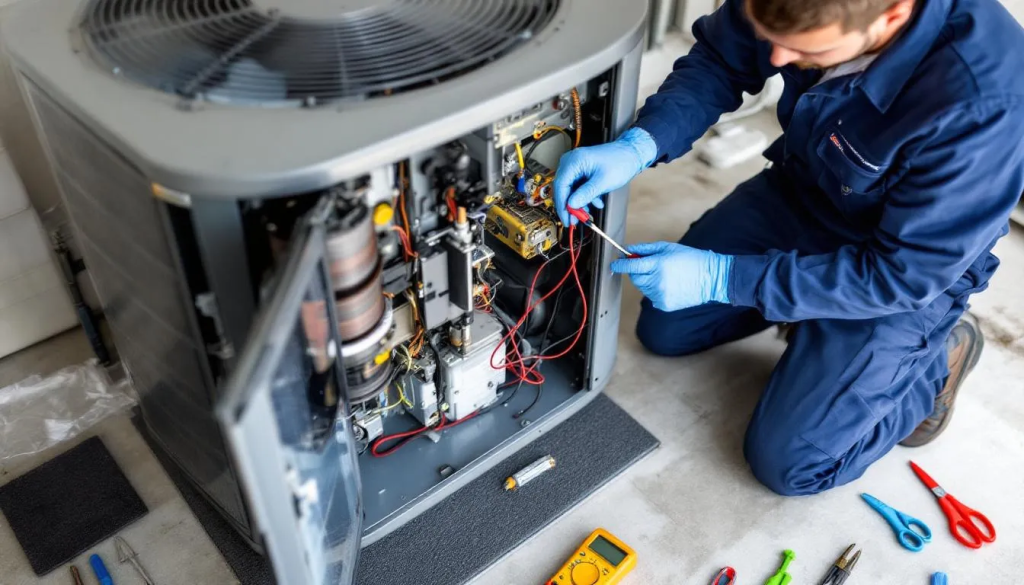
For homeowners uncertain about whether to repair or replace, R&C Heating and Cooling Service offers honest assessments that prioritize your long-term interests over quick sales.
What AC Replacement Actually Costs in Santa Monica (2026)
Based on quotes I collected from five licensed Santa Monica contractors in late 2025 and early 2026, homeowners should budget between $6,000 and $15,000 for a standard replacement. However, several factors can push premium installations toward $18,000-$22,000.
Detailed Cost Breakdown
Understanding what drives AC replacement costs helps you budget appropriately and identify when quotes seem unreasonably high or suspiciously low:
System Size and Tonnage ($800-$3,500 variance): Santa Monica condos and smaller homes (under 1,200 square feet) typically need 2-2.5 ton units. Larger homes (2,000+ square feet) often require 4-5 ton systems. Each additional ton of capacity adds approximately $800-$1,200 to the equipment cost.
Brand Selection ($1,500-$4,000 variance): Value brands like Goodman and Oxbox offer reliable performance at lower price points. Premium brands such as Carrier, Lennox, and Trane command higher prices but often include longer warranties and quieter operation. For my own replacement, I chose a mid-tier Ruud system that balanced cost and quality effectively.
Efficiency Rating ($1,200-$3,500 variance): Higher SEER2 ratings mean better energy efficiency but steeper upfront costs. The gap between a minimum-efficiency 14.3 SEER2 system and a premium 20 SEER2 system can reach $3,000-$3,500.
Installation Complexity ($500-$2,000 variance): Attic installations cost less than ground-level or rooftop installations. Homes requiring electrical panel upgrades, significant refrigerant line modifications, or difficult access points will incur additional labor charges.
Permits and Compliance ($800-$1,200): The City of Santa Monica requires permits for all HVAC replacements. Expect to pay $800-$1,000 for permit fees plus mandatory Title 24 compliance testing (duct leakage and refrigerant charge verification).
Ductwork Conditions ($0-$8,000): Many Santa Monica homes built before 1990 have original ductwork that leaks 15-30% of conditioned air. If duct testing reveals excessive leakage, sealing costs $800-$2,000, while full replacement runs $3,000-$8,000 depending on home size and duct accessibility.
Santa Monica-Specific Cost Considerations
Our coastal location creates unique challenges that can affect replacement costs. Salt air accelerates corrosion on outdoor condenser units, particularly for homes within a mile of the ocean. I always recommend requesting coastal-rated coil coatings, which add $200-$400 but can extend equipment life by 3-5 years.
Additionally, many Santa Monica condos and multi-unit properties built before 2000 have shared wall-mount or package units. HOA approval may be required for replacement, and architectural review processes can add 2-4 weeks to project timelines. Noise ordinances in dense neighborhoods may also restrict certain high-efficiency variable-speed compressors—verify compatibility with your contractor before purchasing.
SEER2 Ratings: Understanding Energy Efficiency in 2026
Energy efficiency standards evolved significantly in 2023 when the Department of Energy implemented new testing procedures, replacing SEER ratings with SEER2 (Seasonal Energy Efficiency Ratio 2). These new ratings provide more realistic efficiency measurements under actual operating conditions.
Minimum Requirements and Optimal Choices
As mandated by federal regulations, California falls in the Southwest region requiring minimum 14.3 SEER2 for split systems installed in 2026. This represents approximately 15 SEER under the old rating system.
However, “minimum legal” and “optimal for Santa Monica” are different targets. Santa Monica’s cooling degree days (CDDs) average 400-600 annually—significantly lower than inland areas like Pasadena that exceed 1,500 CDDs. This moderate cooling demand means ultra-high-efficiency systems (20+ SEER2) often take 15-20 years to recoup their premium cost through energy savings.
For most Santa Monica homes running air conditioning 3-4 months annually, a 16-17 SEER2 system provides the best balance. These units typically achieve return on investment within 8-10 years through reduced electricity costs while costing $2,000-$3,000 less than maximum-efficiency options.
Heat Pumps Deserve Serious Consideration
With Santa Monica’s mild winters—our coldest nights rarely drop below 45°F—heat pumps merit careful evaluation. Modern cold-climate heat pumps maintain high efficiency down to 5°F (far below our winter lows) and qualify for enhanced federal tax credits worth up to $2,000 under the Inflation Reduction Act, compared to $600 for AC-only systems.
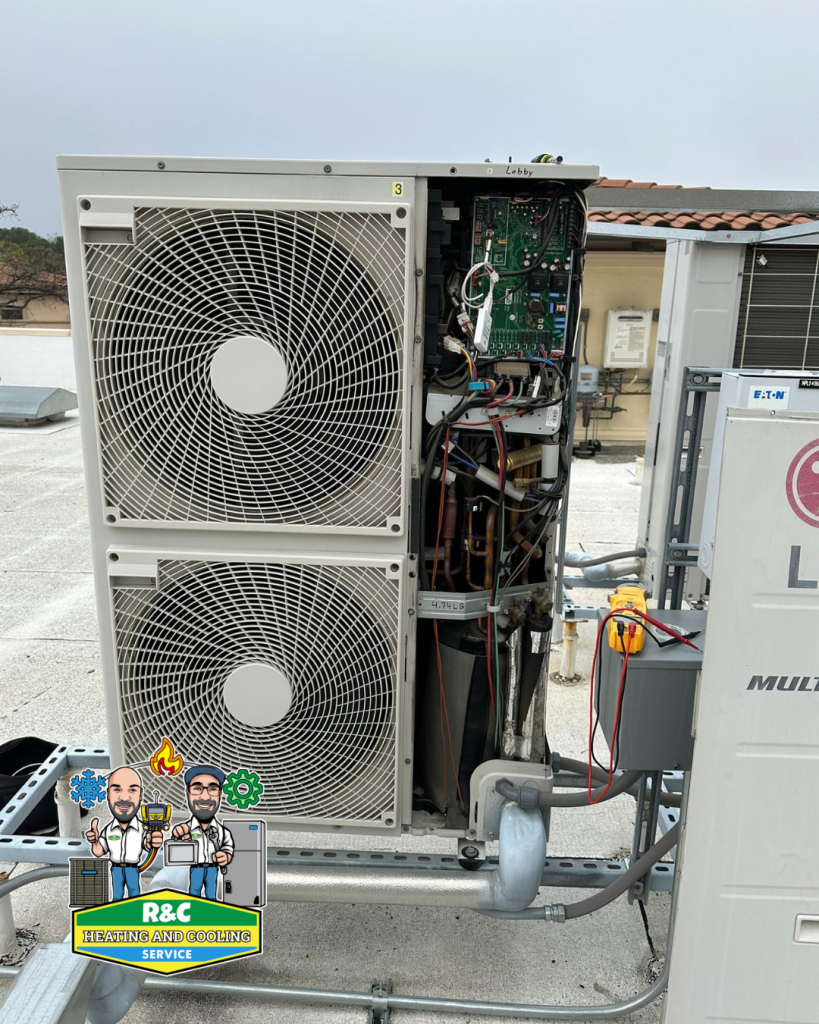
For homes currently using gas furnaces, switching to a heat pump can eliminate one utility connection entirely, reducing ongoing costs and environmental impact. When I helped my neighbors evaluate replacement options last year, their switch to a heat pump reduced their combined heating and cooling costs by approximately 35%.
Choosing the Right Santa Monica HVAC Contractor
Your system’s performance, longevity, and efficiency depend as much on proper installation as on equipment quality. Poor installation can reduce a high-efficiency system’s effectiveness by 30% or more, while expert installation maximizes even mid-tier equipment performance.
Essential Contractor Qualifications
Every HVAC contractor you consider should meet these non-negotiable requirements:
Valid California C-20 License: Verify license status, bond information, and complaint history through the California Contractors State License Board website. Active, unblemished licenses indicate professional standing and consumer protection.
Proper Insurance Coverage: Request certificates of insurance showing both general liability and workers’ compensation coverage. This protects you from liability if workers are injured on your property.
Manual J Load Calculations: Professional contractors perform detailed Manual J calculations to determine proper system sizing based on your home’s square footage, insulation levels, window area, orientation, and other factors. Contractors who simply match your old unit’s tonnage without calculations often install incorrectly sized systems.
In-Home Assessments: Avoid any company providing firm quotes over the phone without inspecting your ductwork, electrical panel, and installation location. Accurate estimates require on-site evaluation.
Permit Handling: Your contractor should manage the entire Santa Monica permitting process, including Title 24 compliance testing (duct leakage verification and refrigerant charge confirmation).
Comprehensive Warranties: Look for minimum 10-year parts warranties on major components and at least 1-year labor guarantees. Premium installations often include 2-5 year labor warranties.
Questions to Ask Every Contractor
During the estimation process, ask these specific questions to separate experienced professionals from sales-focused operators:
- “Will you perform duct leakage testing both before and after installation?” (California’s Title 24 requires duct testing; target total leakage ≤6%)
- “What refrigerant does this system use, and how does it affect long-term maintenance costs?”
- “Can you provide references from three Santa Monica installations completed in the past year?”
- “What’s included in your installation price—permits, disposal, duct modifications, thermostat, startup?”
- “How do you handle unexpected issues discovered during installation, like hidden duct damage or electrical problems?”
For Santa Monica homeowners seeking reliable installation with transparent pricing, professional Santa Monica AC INSTALLATION AND REPLACEMENT services should include all these elements as standard practice.
Red Flags That Should Concern You
Certain contractor behaviors signal potential problems:
- Pressure to decide immediately: Legitimate contractors provide written estimates you can review carefully, not same-day-only “special pricing.”
- Prices significantly below market: Quotes $2,000+ below competitors often indicate unlicensed work, inferior equipment, or corners being cut on installation quality.
- Unwillingness to provide written estimates: Professional contractors document all specifications, costs, and timelines in detailed proposals.
- No local references or physical address: Established companies have verifiable local presence and satisfied customers willing to share experiences.
- Request for full payment upfront: Standard practice is 10-30% deposit, with final payment due upon satisfactory completion and inspection approval.
Maximizing Rebates and Tax Incentives in 2026
Strategic timing and equipment selection can reduce your net AC replacement cost by $2,000-$4,000 through available rebates and tax credits.
Federal Tax Credits Under the Inflation Reduction Act
The Inflation Reduction Act’s 25C tax credit program allows homeowners to claim 30% of installation costs up to $2,000 for qualifying heat pumps and high-efficiency air conditioners. Standard AC-only systems qualify for up to $600 in credits.
To qualify, systems must meet or exceed ENERGY STAR efficiency requirements. Verify your specific model’s eligibility at energystar.gov before finalizing your purchase. Save all receipts, manufacturer certifications, and installation documentation for tax filing.
Important: These are tax credits, not rebates. You’ll receive the benefit when filing your tax return, not at the time of installation. Consult with your tax professional about how these credits affect your specific tax situation.
Southern California Edison Rebates
Southern California Edison periodically offers rebates of $300-$1,000 for qualifying high-efficiency HVAC systems through their energy efficiency programs. However, these rebates operate on limited funding that can be exhausted mid-year.
Check current program availability, specific requirements, and application procedures at sce.com/rebates before selecting your system. Some rebates require pre-approval before installation begins.
PACE Financing for Santa Monica Homeowners
Property Assessed Clean Energy (PACE) financing offers an alternative payment structure that attaches repayment to your property tax bill rather than requiring traditional loans. This can be particularly attractive for homeowners with modest credit scores or those who prefer to spread costs over 10-20 years.
PACE programs often fund 100% of project costs with no money down, though interest rates and fees vary significantly between providers. Evaluate total cost carefully, as some PACE programs carry higher effective interest rates than conventional financing options.
The Installation Process: What to Expect
Understanding the typical timeline and process helps you plan around disruptions and recognize if your project is proceeding normally.
Week 1-2: Research and Estimation
Schedule in-home estimates with 3-5 licensed contractors. Quality contractors typically book estimates 3-7 days out during busy summer months. Each visit takes 45-90 minutes for thorough assessment.
Verify each contractor’s license status through the California Contractors State License Board and check recent customer reviews on Google, Yelp, and the Better Business Bureau.
Week 3: Review and Selection
Compare proposals carefully, looking beyond bottom-line price to evaluate equipment specifications, warranty terms, installation scope, and contractor reputation. Schedule follow-up calls to clarify questions and negotiate final terms.
Week 4: Permitting and Scheduling
Once you’ve selected a contractor and signed the agreement, they’ll submit permit applications to the City of Santa Monica. Permit approval typically takes 3-7 business days. Meanwhile, your contractor orders equipment and schedules installation.
During peak season (May-September), expect installation scheduling 2-4 weeks from contract signing. Off-season installation often happens within 1-2 weeks.
Installation Day(s)
Standard residential AC replacement takes 1-2 days depending on complexity. The crew will typically arrive between 7:00-8:00 AM and work until completion.
Installation includes removing the old system, installing the new indoor and outdoor units, connecting or modifying refrigerant lines, installing or replacing the thermostat, testing all functions, and performing final system checkout. Expect 4-6 hours of moderate noise during condenser unit installation and refrigerant line work.
Final Inspection and Completion
Within 3-5 business days of installation completion, a City of Santa Monica inspector will verify proper installation and Title 24 compliance. Your contractor should schedule and attend this inspection.
Final payment is typically due upon satisfactory completion and inspection approval. Request copies of all permits, warranties, the Manual J load calculation, and Title 24 test results for your records.
Protecting Your Investment Through Proper Maintenance
Even the highest-quality installation requires ongoing maintenance to deliver expected performance and longevity. Annual professional maintenance costs $150-$250 but can extend system life by 5-7 years and maintain efficiency within 95% of factory ratings.
Professional maintenance typically includes refrigerant level verification and adjustment, electrical connection inspection and tightening, condensate drain cleaning, evaporator and condenser coil cleaning, blower motor lubrication, and filter replacement.
Between professional visits, homeowners should replace air filters every 1-3 months depending on filter type and household conditions (pets, allergies, construction). Keep outdoor condenser units clear of debris, vegetation, and obstructions that restrict airflow.
For homes near the beach, rinse condenser coils with fresh water every 3-4 months to remove salt accumulation that accelerates corrosion. This simple preventive measure significantly extends equipment life in coastal environments.
Making Your Final Decision
AC replacement represents a significant investment in your home’s comfort, efficiency, and value. By choosing properly sized equipment with appropriate efficiency ratings, working with a qualified local contractor who performs quality installations, and maintaining your system through its service life, you’ll enjoy reliable cooling for 15-20 years.
Use this decision checklist to evaluate whether replacement makes sense for your situation:
- Unit is 12+ years old
- Repair cost × age exceeds $5,000
- Energy bills increased 20%+ over past 2 years without usage changes
- Experiencing uneven cooling between rooms
- System uses R-22 refrigerant
- Planning to remain in home 5+ years
If you checked three or more items, replacement likely makes more financial sense than continued repairs.
For personalized assessment of your specific situation and transparent pricing on quality installation, Contact Us or Book Now to schedule a comprehensive evaluation from experienced professionals who serve Santa Monica homeowners with integrity and expertise.
Your comfort, energy efficiency, and long-term satisfaction depend on making informed decisions today. Take the time to research thoroughly, ask the right questions, and select equipment and contractors that align with your specific needs and budget.