Central AC vs. Mini Split in Santa Monica, CA: Which System Actually Fits Your Home?
For most Santa Monica homeowners, a ductless mini split is the smarter, more cost-effective choice, especially in homes built before 1980 or properties without existing ductwork. Mini splits cost $2,272 to $6,500 for a single zone locally, run at higher SEER ratings than central systems, and align naturally with the city’s mild, zone-specific cooling demands. Central AC makes sense when whole-home ductwork already exists and is in good condition.
Why Santa Monica Is a Different Market Than the Rest of LA
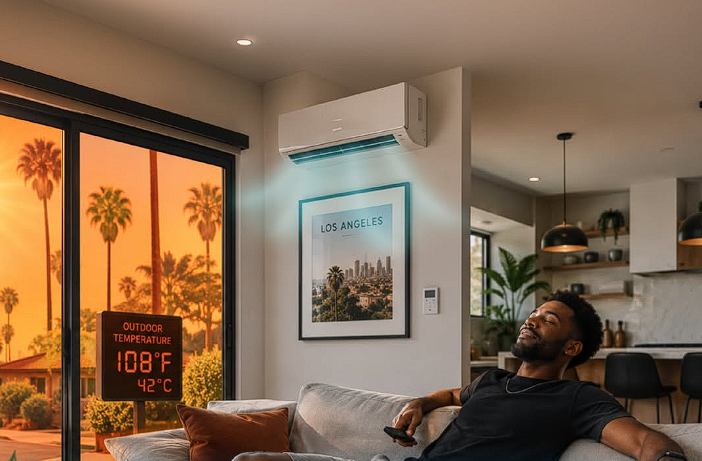
Santa Monica sits in a climatic and regulatory category of its own. The city maintains an independent building department, separate from the City of Los Angeles Department of Building and Safety, with its own permit process and plan review timelines. It is primarily served by Southern California Edison, not LADWP, which means the rebate landscape many LA-area contractors quote by default does not apply here. And then there is the ocean.
The marine layer, the salt air, the “May Gray” and “June Gloom” patterns that define coastal spring and early summer, and the sudden, jarring arrival of Santa Ana wind events that can push temperatures from 65°F to 95°F in a matter of hours: all of these factors shape what kind of cooling system performs best in Santa Mónica. Generic LA comparisons miss most of this nuance. This guide does not.
Is a Mini Split Cheaper Than Central Air in California?
In almost every Santa Monica scenario, yes. The numbers tell a clear story. According to Angi’s Los Angeles cost data, mini split installation in this market ranges from $2,272 to $5,680 for a single zone, with most homeowners paying an average of $3,408. Multi-zone whole-home mini split projects typically run $7,000 to $15,000.
Central air conditioning tells a different story. A standard furnace and central AC combo in the LA area runs $9,000 to $15,000. That figure assumes your ductwork is already in place and in good condition. Many Santa Monica homes, particularly those built before 1980, have ducts that leak 20 to 30 percent of conditioned air. Repairing those ducts costs $2,000 to $4,000. Full duct replacement runs $5,000 to $8,000. Add LA-area labor rates of $120 to $200 per hour and permit costs of $350 to $900, and a central air retrofit in an older Santa Monica property can push $25,000 to $30,000 or beyond.
| System Type | National Average | Los Angeles / Santa Monica |
|---|---|---|
| Mini Split (single zone) | $2,000 to $5,500 | $2,272 to $6,500 |
| Mini Split (multi-zone, whole home) | $4,000 to $14,500 | $7,000 to $15,000 |
| Central AC (full system, existing ducts) | $5,000 to $12,000 | $9,000 to $15,000+ |
| Central AC (with new ductwork) | Up to $20,000 | Up to $30,000+ |
| Permit and inspection fees (LA market) | Varies | $350 to $900 |
To explore current pricing specific to your situation, see How much does a mini split system cost in Santa Monica CA for a detailed breakdown by zone count and BTU capacity.
What Are the Disadvantages of a Mini Split System?
Mini splits are not perfect for every property. Their indoor wall-mounted heads are visible, and some homeowners find the aesthetic less desirable than concealed central air vents. Whole-home coverage requires multiple indoor units, and if those units are not properly sized or placed, you can end up with uneven comfort. Upfront cost for a true whole-home multi-zone system can rival or exceed a central replacement if ductwork already exists.
In Santa Monica specifically, the outdoor condenser is exposed to coastal salt air, which accelerates corrosion on standard aluminum fins. This is not a reason to avoid a mini split, but it is a reason to specify equipment with coastal-rated or epoxy-coated condenser coils and to commit to annual professional maintenance. The salt air factor is real, and any contractor who does not mention it when quoting a Santa Monica installation is not giving you the full picture.
Is Central Air or a Mini Split Better for an Older Home?
For older Santa Monica homes, particularly the bungalows, Spanish Colonials, and pre-war apartment buildings that define much of the city’s residential stock, a ductless mini split is almost always the cleaner solution. These properties were not built with forced-air systems in mind. Retrofitting central air requires routing ductwork through tight attics, crawlspaces, or walls, often at significant structural and financial cost.
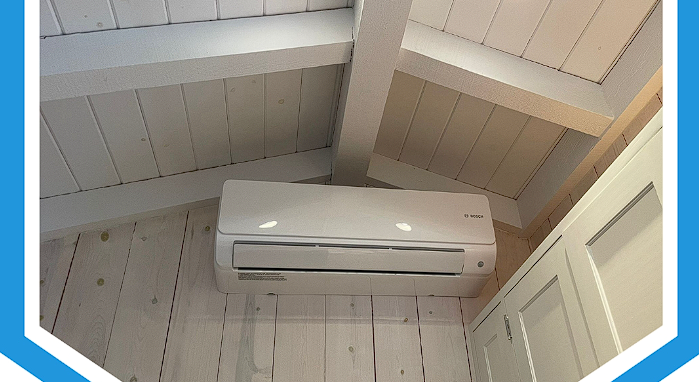
A mini split requires only a three-inch conduit through an exterior wall. Installation is less invasive, faster, and far less likely to disturb original plaster ceilings, historic millwork, or the architectural character that gives these properties their value. For Santa Monica homes listed on the California Register of Historic Resources or in local historic districts, this is not a minor consideration.
Do I Need a Permit for a Mini Split in Santa Monica?
Yes. Santa Monica is an independently incorporated city and maintains its own building department, operating entirely separately from Los Angeles city permitting. Any new ductless mini split installation, heat pump replacement, new outdoor condenser placement, or electrical panel upgrade tied to the HVAC system requires a mechanical permit and, in most cases, an electrical permit as well.
Plan review in Santa Monica currently takes 25 to 30 business days, and expedited review is not available. All projects are evaluated under the 2025 California Building Energy Efficiency Standards (Title 24), which took effect January 1, 2026. These standards expand heat pump requirements and tighten ventilation rules for both residential and commercial properties. A qualified local contractor will pull all required permits on your behalf and ensure the system meets current Title 24 compliance before final inspection.
What SEER Rating Do You Need for California?
California mandates a minimum of 15.2 SEER2 for new central air conditioning equipment. This is a more stringent standard than most other states. Mini split systems routinely exceed this baseline, with many qualifying models achieving 20 SEER2 to 35 SEER2, which translates directly into lower monthly electricity bills and, importantly, higher rebate eligibility thresholds.
This matters in Santa Monica because Southern California Edison’s rebate programs, the relevant programs for most Santa Monica properties, are tiered by efficiency rating. Higher-efficiency equipment unlocks larger incentive amounts. LADWP rebates, which many contractors default to quoting, do not apply in SCE territory. Before accepting any rebate estimate, confirm your utility provider. If your service comes from SCE, the LADWP figures your contractor mentions are not relevant to your project.
The Salt Air Factor: A Santa Monica-Specific Maintenance Reality
Coastal corrosion is one of the most underreported factors in Santa Monica HVAC decisions. Salt-laden marine air attacks aluminum condenser coils on both mini split and central air outdoor units, degrading fin efficiency and shortening equipment lifespan if left unaddressed. Inland HVAC equipment typically needs service every two years under normal residential use. In a coastal environment like Santa Monica, annual coil cleaning and inspection is the responsible standard.
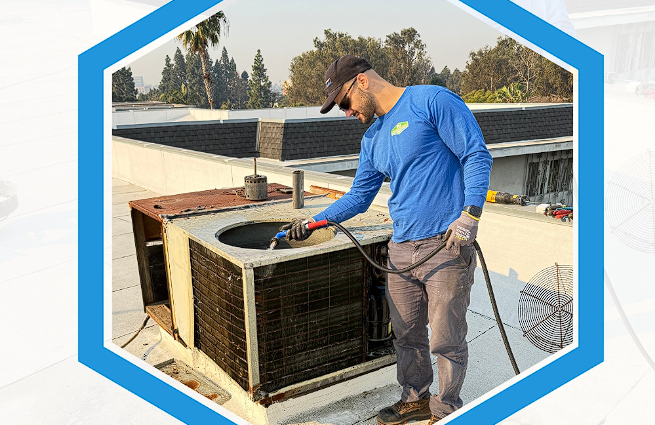
When selecting a mini split for a coastal property, specify units with hydrophilic-coated or epoxy-coated coils, sometimes marketed as “coastal models.” These carry a modest cost premium but meaningfully extend service life in a salt-air environment. The same logic applies to central air outdoor condensers. Your contractor should be asking about your home’s proximity to the water and recommending accordingly.
May Gray, June Gloom, and Why Zoning Changes Everything
Santa Monica’s Mediterranean climate means summer cooling demand looks nothing like Phoenix or the San Fernando Valley. June is frequently overcast and mild. September, not July or August, is statistically the warmest month, driven by offshore pressure patterns and the occasional Santa Ana wind event that pushes desert air toward the coast with little warning.
This seasonal pattern makes whole-home central air a structurally inefficient fit for most Santa Monica households. You are not cooling every room every day from June through September. You are cooling a bedroom or a home office on specific hot afternoons, often asymmetrically across the house depending on sun exposure and layout. A mini split’s room-by-room zoning is purpose-built for this pattern. You run what you need, when you need it, and the rest of the house stays off. Central air does not offer this. Every room gets conditioned or none do, and you pay for all of it either way.
Can a Mini Split Cool a Whole House?
Yes, with proper design. A multi-zone mini split system with one outdoor condenser and multiple indoor heads in key rooms can provide whole-home cooling coverage without any ductwork. For a 1,800 to 2,500 square foot Santa Monica home, a three or four-zone system typically covers primary living areas, bedrooms, and a home office with independent temperature control in each zone.
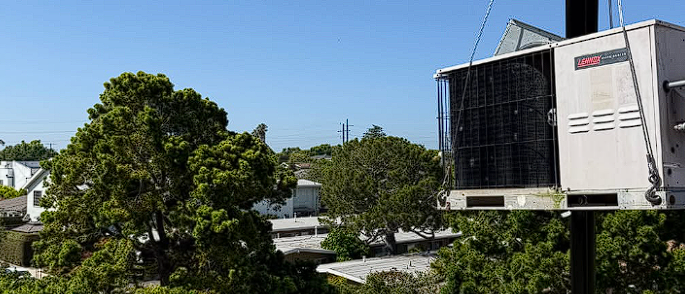
ADUs, guest houses, and garage conversions, a large and growing segment of Santa Monica’s housing stock given the city’s active ADU permitting environment, are particularly well-suited to single-zone mini splits. A standalone ADU rarely warrants the expense and complexity of tying into a central system, and Title 24 compliance for new ADU construction often points directly toward heat pump mini split equipment.
The Refrigerant Transition You Need to Know About
As of January 1, 2025, California regulations restrict the use of R-410A refrigerant in newly manufactured HVAC equipment, in alignment with the federal AIM Act’s phasedown of high global warming potential refrigerants. New mini split and central air systems installed in 2026 and beyond use next-generation refrigerants such as R-32 or R-454B.
This matters for homeowners evaluating a central AC replacement specifically. If you have an older R-410A central system that is aging out, replacement costs reflect new refrigerant equipment pricing, which has shifted the market. And if you are comparing the cost of keeping an aging central system running versus transitioning to a new mini split, factor in that R-410A refrigerant availability and pricing will become more constrained over time, making repairs to older central equipment increasingly expensive.
Home Value ROI in a $1.7 Million Market
Santa Monica’s average home value sits at approximately $1,697,753, well above double the Los Angeles County median. At that price point, HVAC decisions carry real property value implications. A high-efficiency mini split system, properly permitted and installed, is a tangible buyer appeal feature in a market where energy costs, comfort, and environmental responsibility all factor into purchase decisions.
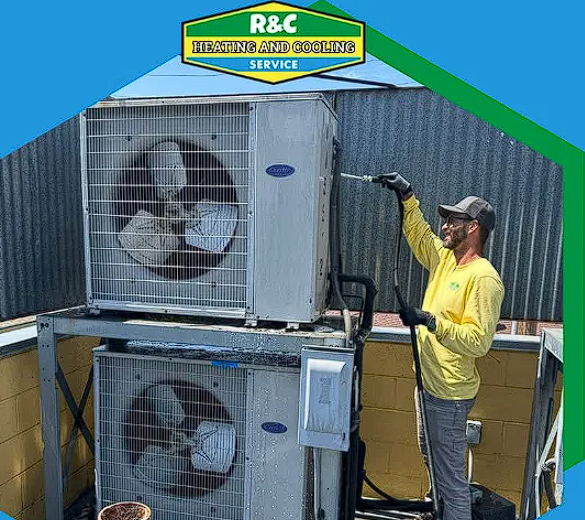
Conversely, an unpermitted installation, or a central system with leaking ducts, an aging refrigerant-dependent compressor, and deferred maintenance, is a liability at inspection. In a competitive Santa Monica resale environment, HVAC condition and efficiency ratings show up in buyer negotiations. A permitted, high-SEER mini split with documented service history is an asset. R&C Heating and Cooling Service handles the permit process and documentation that protects that investment from the first day of installation.
Frequently Asked Questions
Is a mini split cheaper than central air in California?
In most California scenarios, yes. A single-zone mini split in the Los Angeles area averages $3,408, while a full central AC system runs $9,000 to $15,000 or more. For homes without existing ductwork, adding ducts to a central system can push total costs to $25,000 or beyond, making mini splits significantly more economical in most Santa Monica retrofit situations.
Do I need a permit for a mini split installation in Santa Monica?
Yes. Santa Monica operates its own independent building department, separate from the City of Los Angeles. Any new HVAC installation, including ductless mini splits, requires mechanical and electrical permits. Plan review currently takes 25 to 30 business days. All projects must comply with the 2025 Title 24 Building Energy Efficiency Standards, effective January 1, 2026. A licensed contractor will manage this process for you.
What are the disadvantages of a mini split system in a coastal environment?
The primary concern in Santa Monica is salt air corrosion on outdoor condenser coils. Marine air accelerates fin degradation on standard aluminum coils, shortening equipment life. The solution is specifying coastal-rated or epoxy-coated condenser coils and committing to annual professional maintenance. This is a manageable issue, not a dealbreaker, but one that requires the right equipment and service discipline.
Can a mini split system cool an entire Santa Monica home?
Yes. A properly designed multi-zone mini split with one outdoor condenser and multiple indoor heads can provide whole-home coverage without ductwork. Three to four zones typically serve a 1,800 to 2,500 square foot home. Each zone operates independently, which suits Santa Monica’s seasonal, room-specific cooling patterns far better than a central system that conditions all spaces simultaneously.
What rebates are available for mini split installation in Santa Monica?
Santa Monica is primarily served by Southern California Edison, not LADWP, so SCE’s rebate programs apply, not the LADWP figures many contractors quote by default. SCE offers tiered rebates for qualifying heat pump and ductless mini split systems. Rebate amounts depend on system efficiency ratings. The federal Section 25C energy efficiency tax credit expired December 31, 2025, and does not apply to 2026 installations. Confirm your utility provider before relying on any rebate estimate.
How long does a mini split last compared to central AC in Santa Monica?
Both systems typically last 15 to 20 years under proper maintenance. In Santa Monica’s coastal environment, maintenance frequency matters more than the system type. Salt air accelerates outdoor coil corrosion on both mini splits and central air condensers. Annual professional service, including coil cleaning and inspection, is the right standard for coastal properties and will protect either system’s full expected lifespan.
If you are ready to move from comparison to decision, the team at R&C Heating and Cooling Service provides on-site assessments for Santa Monica homeowners that account for your home’s age, ductwork condition, utility provider, permit requirements, and cooling patterns. A proper load calculation and site evaluation takes the guesswork out of a decision this significant. Contact the team today to schedule your consultation and get a transparent, permit-ready quote built for your specific property.